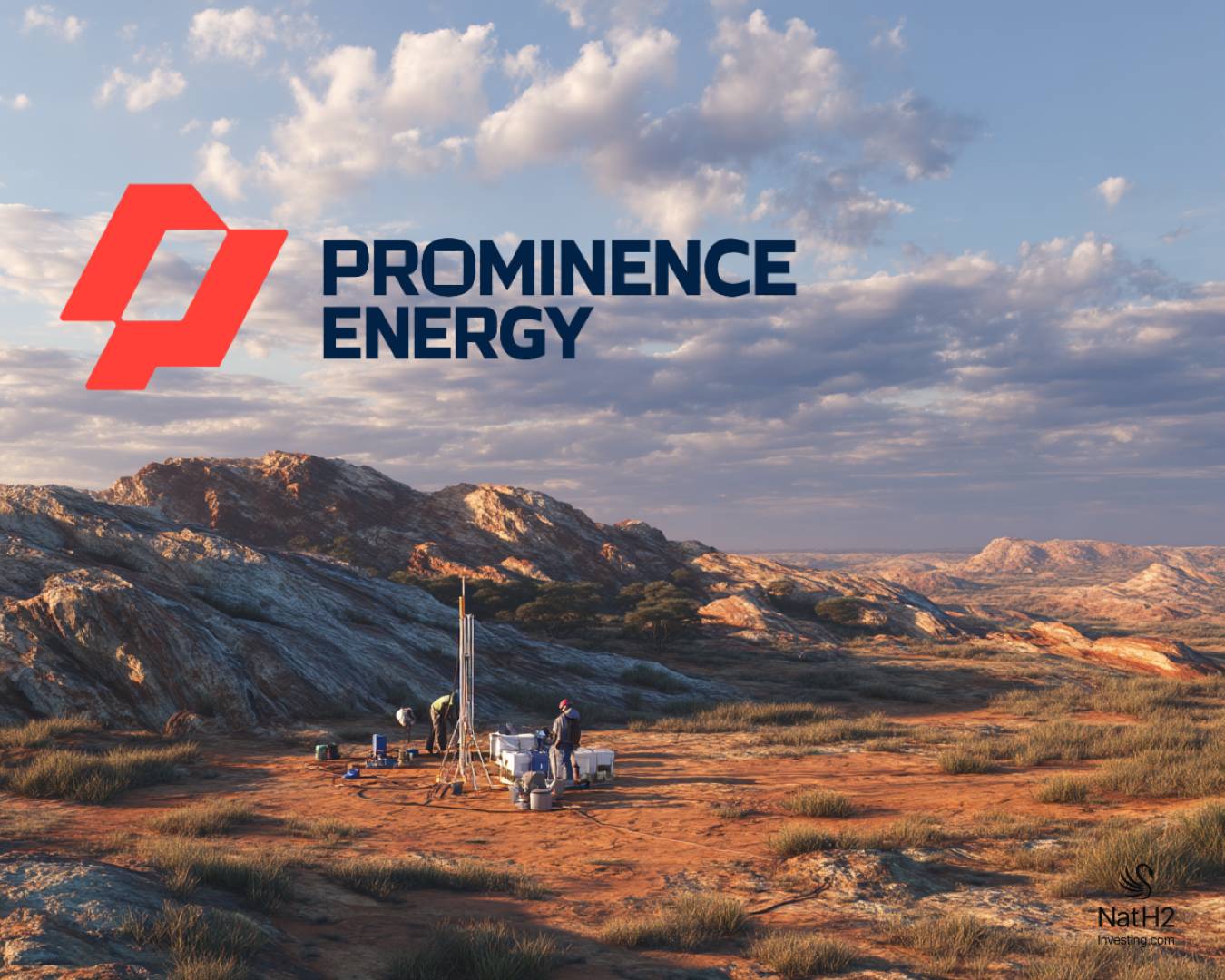
Prominence Energy Secures CSIRO Funding to Advance Gawler Hydrogen Project
Prominence Energy (ASX: PRM) has secured matched funding through the CSIRO Kick-Start program to support a collaborative research initiative focused on natural hydrogen and helium systems within its Gawler Hydrogen Project in South Australia.
The program will be conducted in partnership with CSIRO Energy and is designed to improve the technical understanding of hydrogen and helium occurrence across the Eyre Project (PEL 803). The work will focus on targeted sampling and analytical studies aimed at refining exploration workflows and supporting early-stage screening methodologies applicable across the broader Gawler Craton.
The eight-month program, commencing in April 2026, will integrate geochemistry, petrography, and multi-physics modelling to better characterize subsurface systems and identify indicators relevant to hydrogen and helium prospectivity. Data will be collected from selected wells and analysed to support the development of practical exploration tools for identifying active systems and prioritizing targets.
The collaboration provides Prominence with cost-effective access to specialized technical expertise, enabling the company to accelerate its understanding of key geological processes while advancing a data-driven exploration strategy. The total program cost is approximately $116,000, with CSIRO contributing $50,000 through the Kick-Start initiative.
The Gawler Hydrogen Project spans approximately 64,000 km² across multiple exploration licences and applications, covering a range of geological settings within the Gawler Craton. PEL 803, awarded in 2025, is located on Archean cratonic crust and is considered prospective due to the presence of radiogenic Hiltaba granites, localized uranium mineralization, and deep crustal structures that may support hydrogen and helium generation and migration.
Regional geophysical data, including magnetotelluric surveys, have identified conductivity anomalies interpreted as potential indicators of deep-seated processes, including mantle-derived fluid pathways. These features are being incorporated into ongoing exploration models to better constrain the distribution and behavior of hydrogen systems within the basin.
The outcomes of the CSIRO collaboration are expected to directly inform future exploration programs, including seismic acquisition and drill targeting, as the company continues to advance its hydrogen and helium portfolio in South Australia.
Full press release can be found here.