Gold Hydrogen Confirms Hydrogen Flow at Ramsay 3 and Models Potential Production of 100 kg Per Day
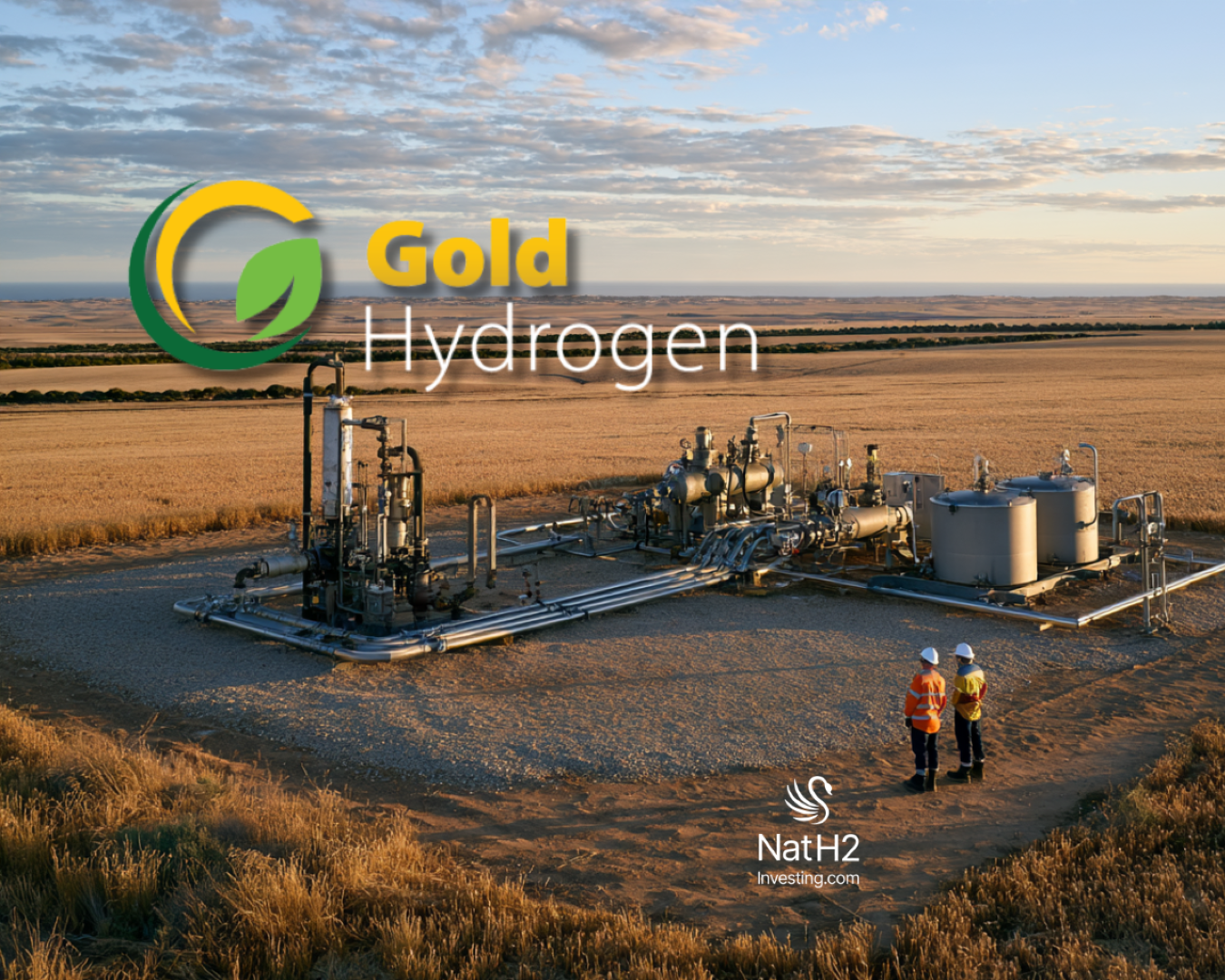
Gold Hydrogen Limited (ASX: GHY) has completed natural hydrogen flow testing at its Ramsay 3 well in South Australia's Yorke Peninsula, confirming that hydrogen-bearing gas can be brought to the surface and separated from formation water. The company has also released engineering estimates indicating that a future development well could potentially produce approximately 100 kilograms of natural hydrogen per day.
Announced on November 2, 2026, the results represent an important appraisal milestone for the Ramsay Project, where Gold Hydrogen is investigating the potential to develop both natural hydrogen and helium resources.
The announcement distinguishes between hydrogen recovered during actual well testing and the substantially higher production rates projected through reservoir modelling.
At Ramsay 3, the company successfully flowed formation water containing dissolved gas to the surface, where hydrogen was separated and measured. Similar recovery had previously been demonstrated at Ramsay 2.
The Ramsay 3 test was conducted between October 13 and 16, targeting the Parara Limestone formation within exploration permit PEL 687.
The company isolated the previously tested Kulpara Dolomite intervals and perforated the Parara Limestone across a combined 69-metre interval between approximately 170 and 464 metres measured depth.
An electrical submersible pump was installed at approximately 480 metres to recover formation water and associated gas.
During testing, Ramsay 3 achieved gross fluid flow rates of up to approximately 1,700 barrels per day, with an estimated pressure drawdown of 400 pounds per square inch.
This was a measurement of total produced fluid, predominantly formation water, rather than a direct hydrogen production rate.
The company reported that gas was successfully separated at the surface and that hydrogen was detected in the recovered gas stream.
Hydrogen concentrations associated with Ramsay 3 drilling and testing ranged from approximately 6% to 97% on an air-corrected basis. The maximum 97% concentration was recorded during drilling using calibrated mud-gas measurements and sampling techniques.
It should not be interpreted as a sustained hydrogen concentration achieved throughout the October flow test.
The well had not fully cleaned up during testing, and additional laboratory analysis is required to confirm aspects of the gas composition.
Importantly, Gold Hydrogen has not established a measured hydrogen production rate in kilograms per day at Ramsay 3.
The company states that insufficient information is currently available to determine the well's raw gas and natural hydrogen flow rates.
The headline production figure of approximately 100 kilograms per day instead comes from engineering modelling informed by the company's Ramsay drilling and testing programs.
Gold Hydrogen has now completed three Parara Limestone flow tests across Ramsay 2 and Ramsay 3, conducted between 2024 and 2026.
The combined results provide additional information about formation pressure, fluid productivity and the potential behaviour of hydrogen-bearing reservoir intervals.
Based on this information, the company has evaluated several potential development configurations, including vertical wells and longer horizontal wells.
At a rounded rate of 100 kilograms per day, a continuously operating well would produce approximately 36.5 tonnes of hydrogen annually.
Gold Hydrogen compared its modelled production rate with the Bourakébougou natural hydrogen field in Mali, where a producing well has reportedly supplied hydrogen for local electricity generation since 2012.
That well has been reported to produce hydrogen at a rate equivalent to approximately 125 kilograms per day.
The comparison provides a reference point for potential production scale, but it does not establish that Ramsay has equivalent reservoir characteristics or long-term performance.
Beyond hydrogen extraction, the latest results have strengthened Gold Hydrogen's interest in a potential green methanol development on the Yorke Peninsula.
The company is conducting a feasibility assessment with Japanese chemicals group Mitsubishi Gas Chemical under a non-binding memorandum of understanding signed in June 2026.
The proposed facility would combine natural hydrogen from Ramsay with renewable electricity and a locally sourced biogenic carbon feedstock, potentially derived from agricultural residues such as cereal straw.
Methanol is an established industrial chemical and an increasingly important alternative marine fuel.
Using natural hydrogen as a feedstock could offer a different production pathway from conventional methanol manufacturing, although the environmental and economic performance of any future facility would require detailed assessment.
Hydrogen indications have been recorded at Ramsay 1, Ramsay 2, Ramsay 3 and Ramsay 4, with geological continuity between Ramsay 2 and Ramsay 3 interpreted across approximately 2.3 kilometres.
The company intends to integrate drilling, flow-testing and pressure data into updated reservoir models while assessing additional step-out locations across its Yorke Peninsula exploration area.
Independent laboratory analysis of Ramsay 3 gas and water samples is also ongoing, including compositional and isotopic investigations.
Full press release can be found here.