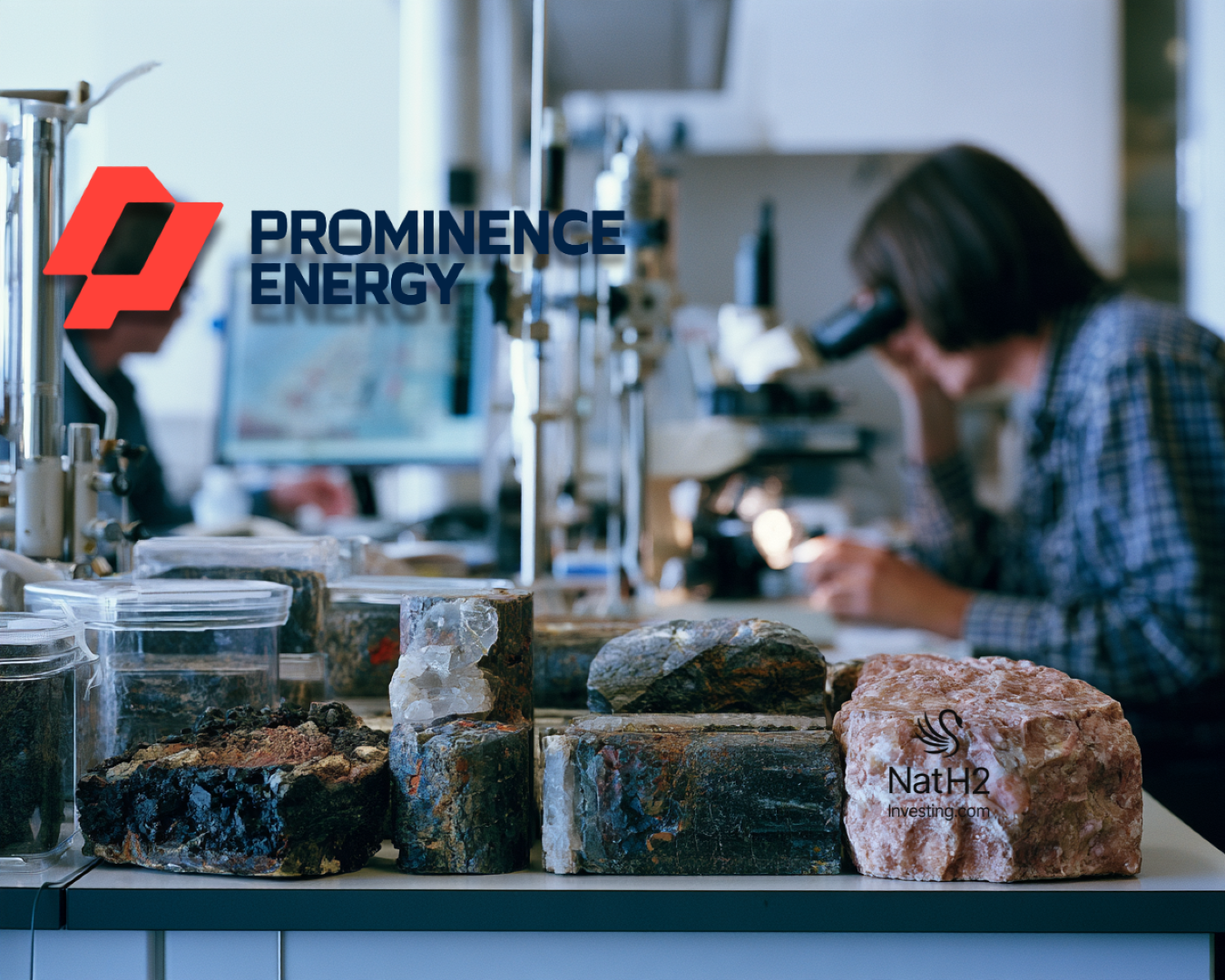
Prominence Energy Detects Hydrogen in All 28 Rock Samples as CSIRO Study Strengthens Eyre Peninsula Exploration Targets
Prominence Energy Limited (ASX: PRM) has reported hydrogen detection in all 28 successfully analysed rock samples from South Australia's Eyre Peninsula region, following a scientific investigation conducted by CSIRO. The findings provide new geological evidence to support the company's natural hydrogen exploration strategy ahead of a proposed drilling campaign in 2027.
Announced on November 4, 2026, the results identify two potential hydrogen-generation mechanisms, possible subsurface migration pathways and preliminary evidence of a rock formation that could act as a geological seal. Together, these findings will help Prominence prioritise exploration targets within its Eyre Project, including PEL 803.
The most significant observation was the detection of hydrogen in microscopic fluid inclusions in all 28 successfully analysed samples. These inclusions are small pockets of fluid or gas trapped within minerals during geological processes.
CSIRO used a rock-crushing technique to release and measure gases preserved within the samples. The findings are consistent with hydrogen-bearing fluids having circulated through several basement rock formations in the past.
The highest measurement was 7.72 millimoles of hydrogen per kilogram of rock, recorded in a quartz vein from the Tunkillia Suite.
Importantly, these measurements represent hydrogen released from crushed rock samples, not hydrogen flowing from an underground reservoir. The timing of the fluid circulation remains unknown, and the results do not establish active hydrogen generation or commercially recoverable accumulations.
Beyond the hydrogen detections, the investigation identified two geological processes that could potentially generate natural hydrogen.
The first is radiolysis, a process in which radiation from naturally occurring radioactive elements breaks down water molecules, potentially releasing hydrogen.
CSIRO identified uranium- and thorium-enriched rocks within the Hiltaba Suite, particularly the Cultana Subsuite, as prospective candidates for this mechanism.
Investigated Cultana samples contained uranium concentrations reaching 50.9 parts per million and thorium concentrations of up to 142.5 parts per million.
These concentrations indicate geological characteristics compatible with radiolytic hydrogen generation, although the investigation did not quantify present-day generation rates.
The second proposed mechanism involves chemical reactions between water and iron-bearing rocks.
When reduced iron is oxidised under suitable geological conditions, hydrogen can be generated through water–rock interactions.
A chlorite schist sample from the Sleaford Complex contained 8.39% ferrous iron by weight, while additional reduced-iron potential was identified in Tunkillia dolerites and Hiltaba-associated metagabbros.
Whether these formations are actively generating hydrogen depends on factors including water availability, temperature, mineral reactivity and subsurface conditions.
The investigation also considered how hydrogen might migrate through the geological system.
Faults and fracture networks were identified as possible pathways, with several higher hydrogen measurements occurring near intersections of major geological structures.
Prominence intends to integrate these findings into its exploration model, focusing on locations where potential hydrogen-generating rocks, migration pathways, suitable reservoirs and sealing formations may coincide.
Planned follow-up work includes additional assessment of source-rock characteristics, expanded testing of potential sealing formations and investigation of hydrogen-bearing fluid inclusions.
The company is also considering deeper fluid sampling to help distinguish evidence of historical hydrogen circulation from present-day hydrogen occurrence.
Prominence has commenced updated drilling engineering and cost assessments, alongside a farm-out process intended to attract potential project partners.
Detailed planning for the proposed drilling campaign is scheduled for November and December 2026.
The company is targeting a multi-well helium and natural hydrogen exploration program in mid-2027, subject to technical results, approvals and funding.
The Eyre Project forms part of Prominence's approximately 64,000-square-kilometre South Australian exploration portfolio, which also includes the Northern Hinge Project.
Full press release can be found here.