Gold Hydrogen’s Ramsay 3 Reaches 13,000 bbl/day as Helium Testing Moves Into Phase 2
Gold Hydrogen has completed the first phase of helium flow testing at Ramsay 3 in South Australia, reaching gross fluid and gas rates of up to 13,000 barrels per day as the company moves into a second testing phase across the shallower portion of the 180-metre-thick Kulpara Dolomite reservoir.
The results mark another step in Gold Hydrogen’s effort to determine whether the high helium concentrations previously demonstrated at Ramsay can be combined with sufficient reservoir productivity to support commercial development.
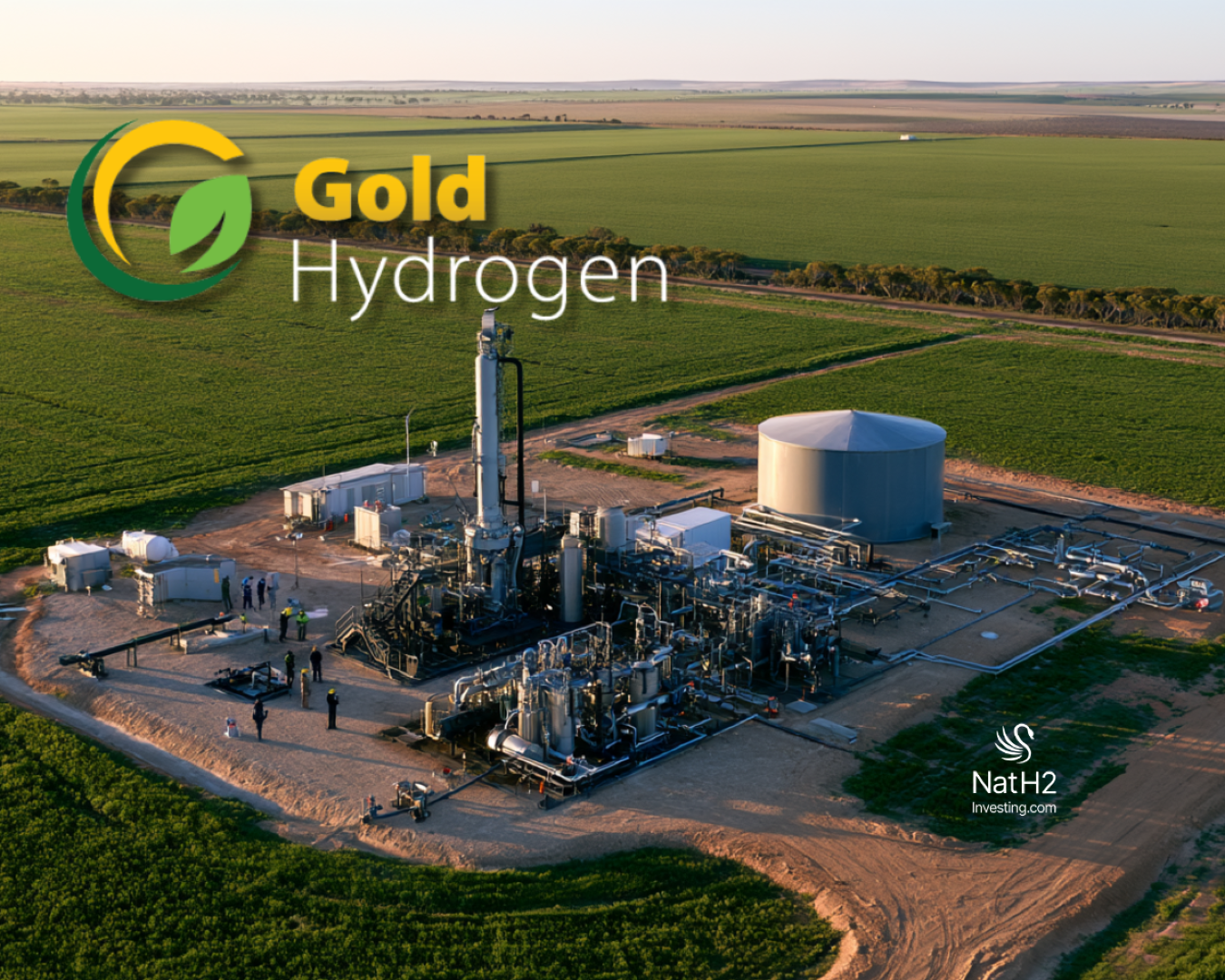
Phase 1 was conducted between September 10 and September 30 with the electrical submersible pump positioned at approximately 730 metres depth. Ramsay 3 has a 105-metre perforated interval within the 180-metre gross Kulpara target, with perforations between approximately 500 and 800 metres.
The well produced gross fluid rates of up to 13,000 bbl/day, with more than 25,000 barrels of fluid recovered during Phase 1. No fracture stimulation was used.
That rate represents a substantial increase in testing scale compared with the earlier Ramsay wells, reflecting Ramsay 3’s larger-diameter design and higher-capacity pumping equipment.
Gold Hydrogen has previously reported a Productivity Index of approximately 40 bbl/day/psi at Ramsay 3, the highest reported across the Ramsay wells to date. The company interprets that result as evidence of strong permeability and reservoir deliverability in the Kulpara Dolomite.
The distinction between fluid productivity and helium production remains important.
The reported 13,000 bbl/day figure is a gross fluid and gas rate, not a helium gas flow rate. Representative helium concentrations for the gross Ramsay 3 reservoir interval have also not yet been established.
Gas and water samples collected during Phase 1 are undergoing internal analysis, while Gold Hydrogen says it does not yet have sufficient information to determine representative helium concentrations or final flow rates across the gross Kulpara reservoir.
The company is repositioning its 20,000 bbl/day-capacity ESP into a shallower section of the Kulpara Dolomite for a stepped-rate flow testing program.
The second phase is designed to gather additional reservoir deliverability data, determine flow rates under different operating conditions, assess dynamic pressure behaviour and, critically, evaluate gas composition and helium concentrations.
Gold Hydrogen has indicated that higher gross flow rates of up to 20,000 bbl/day are expected during Phase 2. That figure is a testing objective enabled by the pump capacity rather than a demonstrated reservoir flow rate at this stage.
The company intends to combine results from both phases before issuing a comprehensive helium testing update.
Those results will also be integrated into Gold Hydrogen’s geological model as part of its work toward assessing potential Contingent Resources for the Ramsay Helium Project.
Ramsay 3 is effectively the scale-up well in a testing sequence that began with Ramsay 1 and Ramsay 2.
At Ramsay 1, Gold Hydrogen previously reported sustained air-corrected helium concentrations of approximately 19%, with gas successfully brought to surface and subsequent separation and purification trials undertaken.
Ramsay 2 returned sustained air-corrected helium concentrations of approximately 20% from the Kulpara Dolomite and successfully flowed and separated the gas. Dynamic testing also supported continuity of the helium-bearing Kulpara reservoir between Ramsay 1 and Ramsay 2, which are approximately 500 metres apart.
The technical tables included with the October 6 announcement provide additional context.
Ramsay 1's 2026 test reached gross fluid rates of up to 2,000 bbl/day, constrained by the installed ESP, while its helium concentration stabilized at approximately 19%. Ramsay 2 subsequently reached gross fluid rates of up to 2,300 bbl/day and returned 20% air-corrected helium from the Kulpara interval.
Ramsay 3 is therefore testing the same broader helium-bearing system with substantially greater pumping capacity and a larger well configuration.
The commercial question is increasingly moving beyond simply demonstrating high helium concentrations.
Gold Hydrogen now needs to establish how the reservoir behaves under larger-scale operating conditions and determine the relationship between fluid production, gas-water ratios, helium concentration, pressure response and sustainable gas deliverability.
Phase 2 is designed to provide more of that information.
The sequence can be viewed as:
Ramsay 1 → demonstrate helium concentration and flow
Ramsay 2 → confirm high helium concentration and reservoir continuity
Ramsay 3 Phase 1 → test larger-scale reservoir productivity
Ramsay 3 Phase 2 → evaluate deliverability, composition and dynamic performance
The larger-diameter Ramsay 3 well will be crucial because Gold Hydrogen intends to use it for both helium and natural hydrogen testing.
Once the helium program is completed, the company plans to move into flow testing of the natural hydrogen-bearing zones at the same well. That preserves the dual-commodity development thesis underlying the broader Ramsay Project.
Helium is currently further along in the appraisal process, supported by the concentrations and flow testing already completed at Ramsay 1 and Ramsay 2. Natural hydrogen testing at Ramsay 3 remains the subsequent stage.
Full press release can be found here.