Gold Hydrogen Confirms Helium-3 at Ramsay, With Concentrations Up to 165 Times Atmospheric Levels
Gold Hydrogen Limited (ASX: GHY) has confirmed the presence of rare helium-3 in gas recovered during flow testing at its Ramsay Project in South Australia, with preliminary laboratory results identifying concentrations of up to 1,220 parts per trillion (ppt).
The findings follow independent isotopic analysis by the University of Oxford's specialist noble gas laboratory. Helium-3 was detected in all six samples collected from the Ramsay 1 and Ramsay 2 wells during the company's 2026 testing programme.
The highest reported concentration, measured in a sample from the Ramsay 2 Hiltaba Basement test, is approximately 165 times the atmospheric helium-3 concentration of 7.3 ppt.
The result represents the highest helium-3 concentration reported at Ramsay to date and introduces a potential additional product to Gold Hydrogen's proposed helium development.
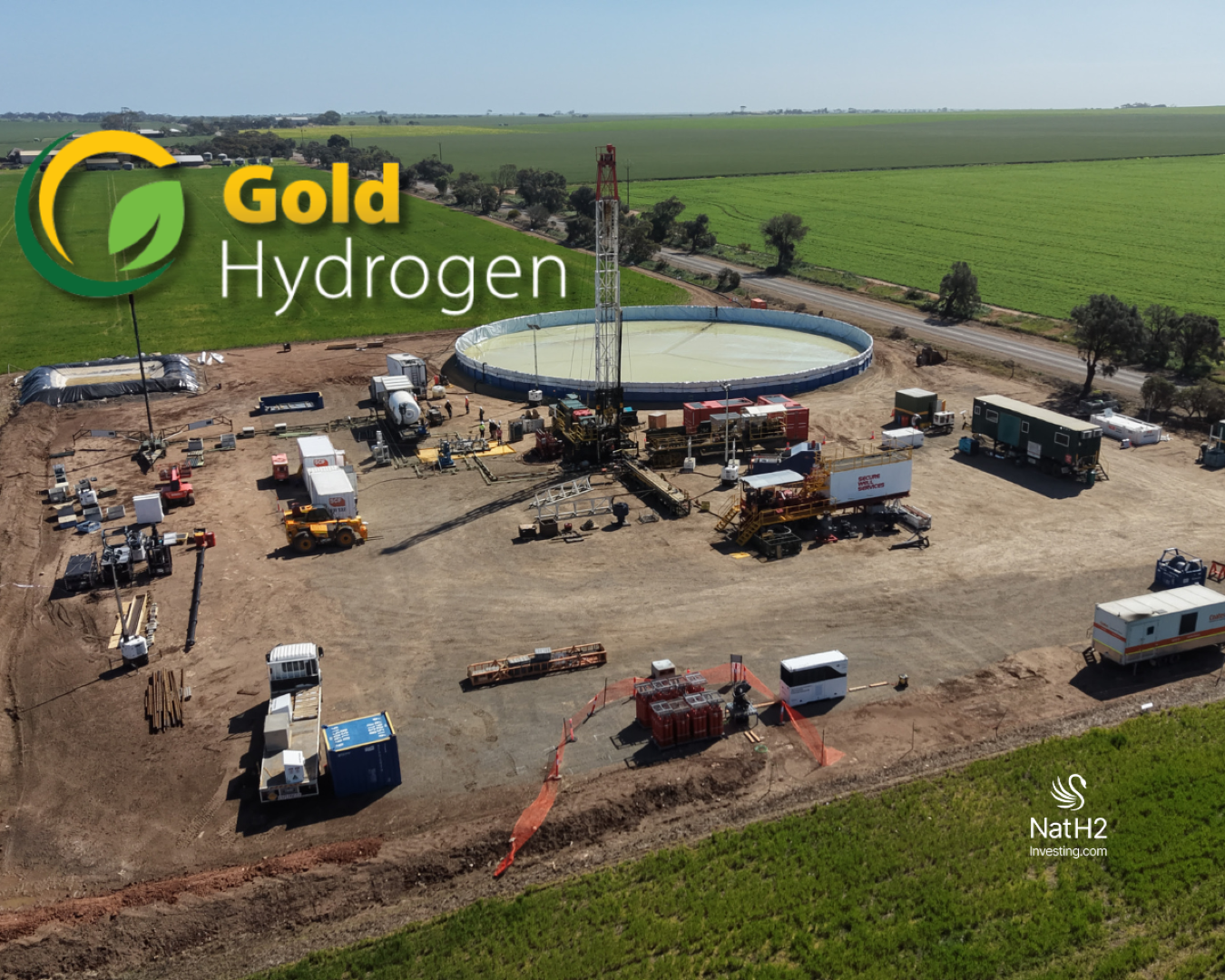
The Ramsay Project is located on South Australia's Yorke Peninsula within petroleum exploration licence PEL 687. Gold Hydrogen holds a 100% working interest in the tested wells.
The latest analysis examined two gas samples from Ramsay 1 and four from Ramsay 2. The Ramsay 2 samples included material from tests involving the Kulpara Dolomite and the deeper Hiltaba Basement.
Oxford's results showed different helium-3 concentrations across the tested intervals.
At Ramsay 1, argon-corrected concentrations ranged from 504 to 534 ppt. Samples from the Ramsay 2 Kulpara Dolomite test returned 853 to 881 ppt, while samples from the Hiltaba Basement test returned 1,191 to 1,220 ppt.
These measurements were corrected for argon introduced when the flow-testing system was purged during start-up. The correction adjusts for dilution of the gas stream, making it an important part of interpreting the reported concentrations.
For comparison, the highest uncorrected laboratory measurement in the new sample set was 583 ppt. The corresponding argon-corrected value was 1,220 ppt.
The distinction matters because the headline concentration is not an unadjusted measurement of the original gas sample.
Gold Hydrogen previously reported helium-3 concentrations of up to 901 ppt from Ramsay samples analysed in 2024. Those earlier results were reported without the argon correction applied to the 2026 measurements.
The new maximum is approximately 35% higher than the previous reported figure, although the different treatment of the measurements should be considered when comparing the two campaigns.
An important feature of the latest testing is that the samples were collected from gas brought to the surface during sustained flow operations using electrical submersible pumps.
This provides more direct evidence of helium-3 occurring within the produced gas stream than laboratory analysis of isolated subsurface samples alone.
Helium-3 is a stable, non-radioactive isotope of helium with specialized applications in quantum computing, cryogenic cooling, neutron detection, national security and medical research.
It is also being investigated as a potential fuel for advanced nuclear fusion systems, although such fusion applications remain developmental.
The isotope is extremely scarce in terrestrial commercial supply chains.
Unlike conventional helium-4, which is produced commercially from certain natural gas accumulations, much of the available helium-3 supply has historically been associated with the radioactive decay of tritium.
This scarcity has encouraged research into alternative sources, including natural gas reservoirs containing measurable helium-3.
Gold Hydrogen has highlighted indicative helium-3 values of approximately US$18 million per kilogram, depending on purity and market conditions.
Full press release can be found here.