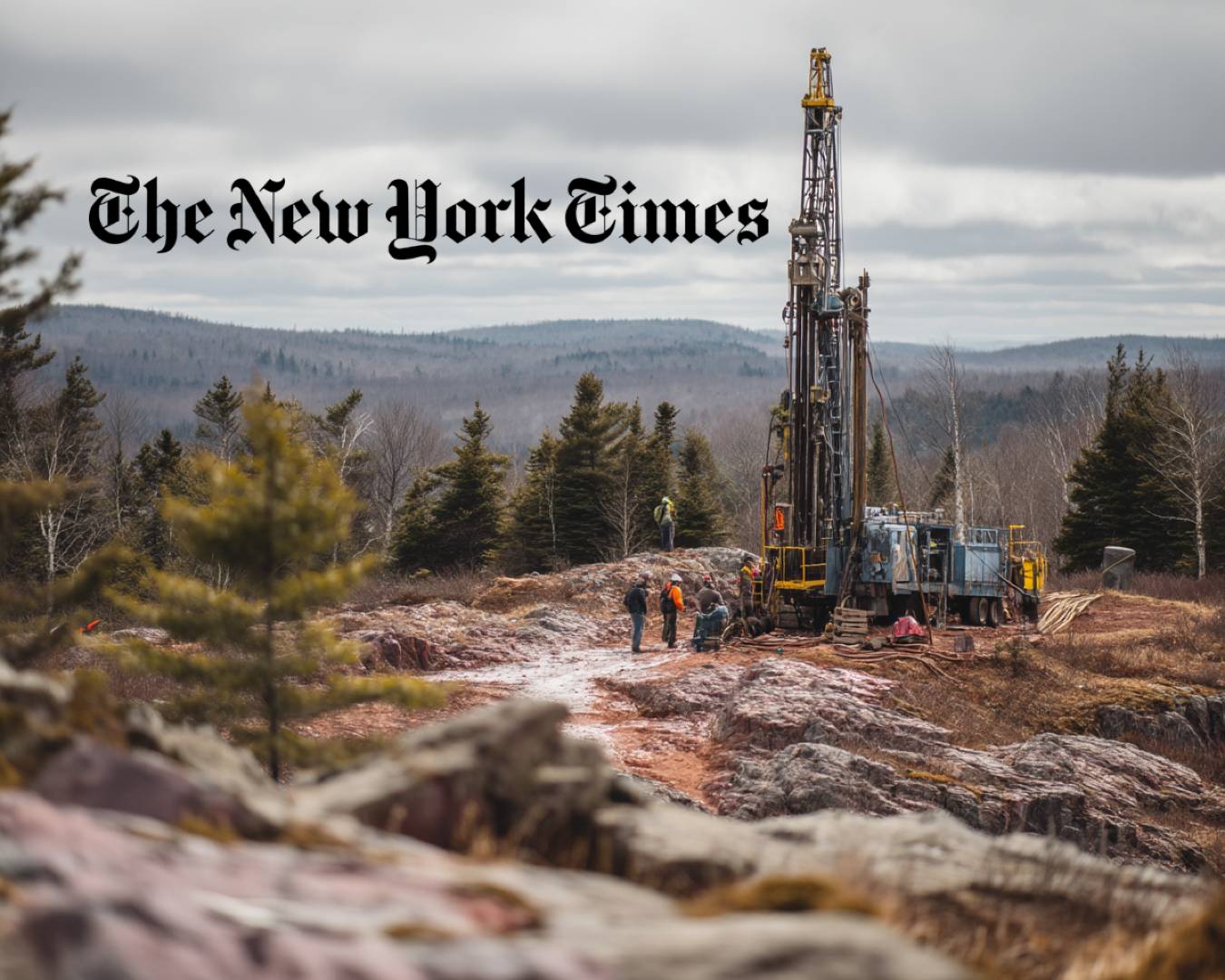
The New York Times: The Quest for an Elusive Clean Fuel is Moving Underground
A recent New York Times feature explores the growing momentum behind geologic hydrogen, a field that is shifting from theoretical research into early-stage field testing. The article highlights both approaches now emerging across the sector: companies searching for naturally occurring hydrogen accumulations and others attempting to stimulate hydrogen production directly within subsurface rock formations.
One focal point is a pilot effort in Quebec, where Vema Hydrogen is experimenting with injecting water into iron-rich rocks to accelerate natural chemical reactions that generate hydrogen. This approach reflects a broader trend toward engineering subsurface systems rather than relying solely on discovery.
The piece also places these efforts in a wider context, noting increasing scientific confidence that hydrogen exists in meaningful quantities underground, alongside rising investor interest and early government attention. At the same time, it outlines the key uncertainties: ranging from geological variability and economic viability to technical risks such as gas leakage or subsurface instability.
Overall, the article frames geologic hydrogen as a high-upside but still unproven energy pathway, with parallels to the early days of oil exploration. The core question is no longer whether hydrogen can be generated or found underground, but whether it can be produced consistently, economically, and at scale
Find the full article here.