PetroChina Researchers Report Up to 98.24% Natural Hydrogen From Sichuan Basin Gas Seep
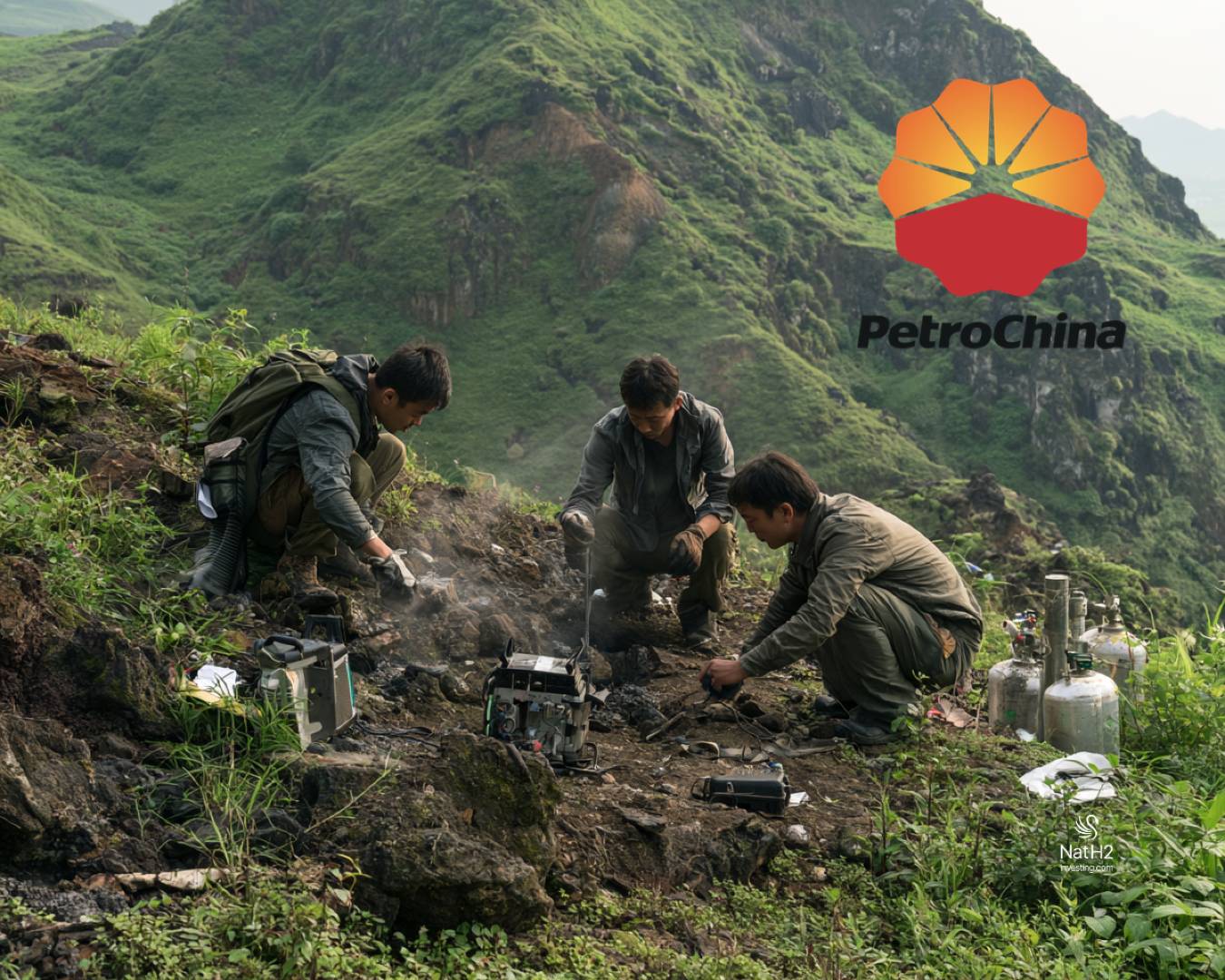
Researchers in China have reported exceptionally high-purity natural hydrogen from a gas seep in the southern Chengdu area of the Sichuan Basin, with laboratory measurements ranging between 97.33% and 98.24% H₂.
The gas leak was first identified in June 2026 and subsequently sampled for detailed compositional analysis. According to the researchers, the hydrogen content reached 98.24%, making it the highest natural hydrogen concentration yet reported in China and one of the few known occurrences globally above 98% purity.
The gas composition was notable for what it did not contain.
Alongside hydrogen, only trace amounts of nitrogen and methane were detected. Detailed chemical and carbon isotope testing was then used to investigate the origin of the gas and rule out conventional organic decomposition or high-temperature methane cracking as the dominant source.
The researchers instead interpret the hydrogen as originating from a deep inorganic fluid system within the Earth’s crust.
Trace nitrogen was also analysed and interpreted as being linked to deep crustal metamorphic fluids rather than simple atmospheric contamination, adding another piece of evidence for a subsurface geological origin.
The geological setting provides a possible generation mechanism.
The seep occurs in an area containing Permian volcanic rocks adjacent to the Shimian-Miaowan Neoproterozoic ophiolite belt. Based on this setting, the researchers suggest that serpentinized peridotite or Permian diabase porphyry may act as active hydrogen-generating source rocks.
Both contain iron-bearing minerals capable of producing hydrogen through water-rock reactions.
Once generated, the hydrogen is thought to migrate rapidly toward the surface along regional faults.
That rapid transport is important because hydrogen can otherwise be consumed through reactions that convert it into methane and other hydrocarbons. The researchers argue that the Sichuan system may allow hydrogen to migrate quickly enough to avoid significant Fischer-Tropsch-type conversion, preserving the unusually high purity measured at surface.
The finding adds another geological model to China’s rapidly expanding natural hydrogen research effort.
Earlier work from PetroChina researchers in northern China identified high-concentration hydrogen associated with hydrothermally altered iron-rich igneous rocks in the North China Craton. The Sichuan Basin result suggests a different but related exploration model involving ophiolitic and volcanic source rocks connected to active fault-controlled migration pathways.
The comparison with Mali is also notable.
The Bourakébougou field has demonstrated naturally occurring hydrogen at concentrations approaching similar levels, providing one of the few operating examples of high-purity geologic hydrogen. The Chengdu-area seep therefore adds another real-world occurrence where hydrogen purity is exceptionally high.
The next phase of research is expected to focus on mapping potential deep source rocks, tracing migration pathways through fault systems and using isotope analysis to better understand whether hydrogen generation is ongoing.
For the broader natural hydrogen sector, the result is another reminder that the most valuable exploration clues may not come solely from drilling.
Surface gas seeps, when combined with isotope analysis, regional structure and a credible source-rock mechanism, can provide important evidence of active subsurface hydrogen systems.
Full press release can be found here [EXTERNAL]