New Zealand Commits Up to NZ$17.8 Million to Explore Natural and Stimulated Hydrogen in Southland
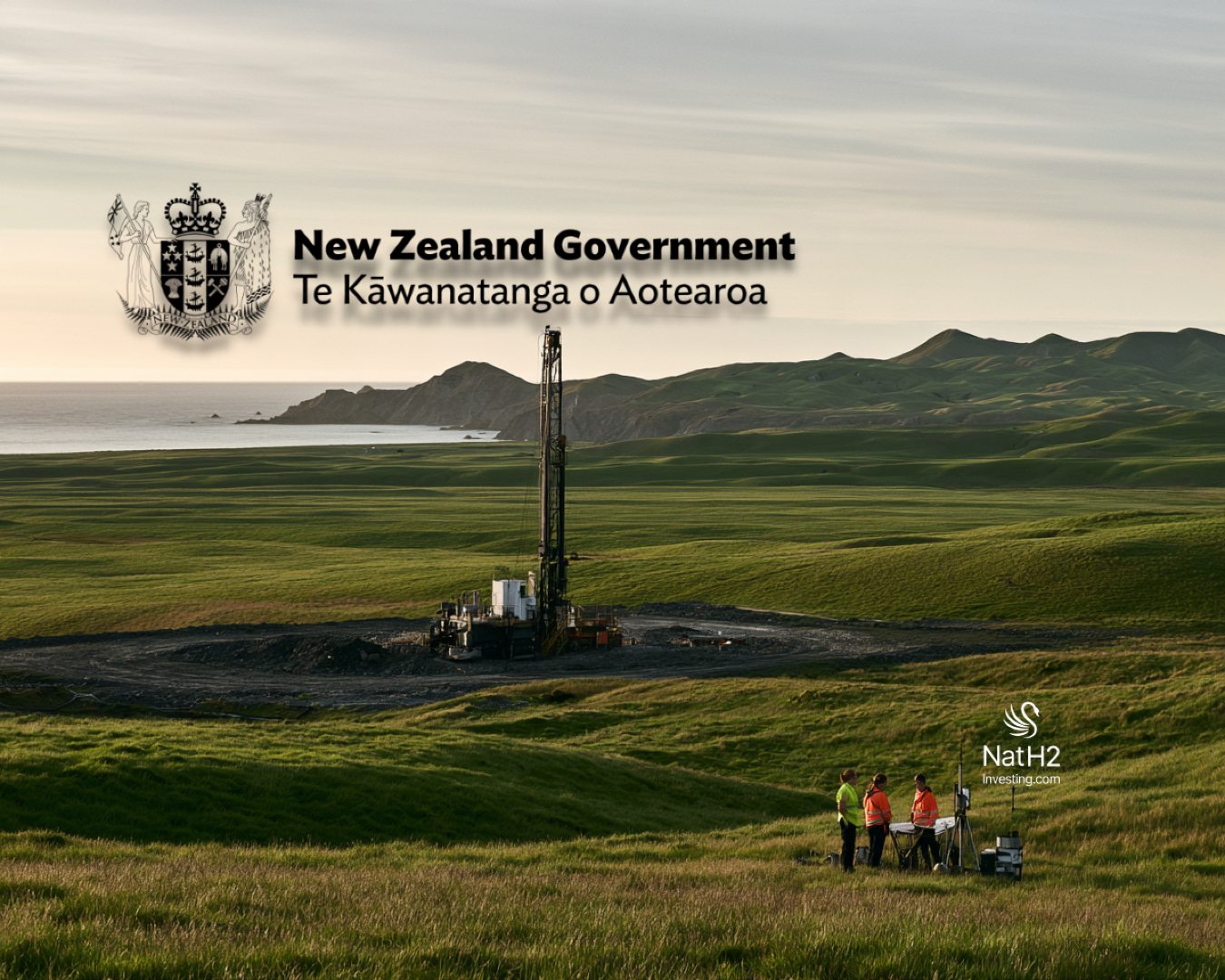
The New Zealand Government has announced funding of up to NZ$17.8 million to accelerate research into the commercial potential of natural and orange hydrogen, with an initial drilling programme planned near Bluff in the Southland region.
The investment, provided through the Regional Infrastructure Fund (RIF), is intended to improve understanding of New Zealand's subsurface hydrogen resources and assess whether they could contribute to the country's long-term energy security, regional economic development and industrial energy supply.
Regional Development Minister Shane Jones announced the funding as part of the Government's broader effort to investigate emerging domestic energy opportunities amid uncertainty surrounding international energy markets.
The research programme will be led by Earth Sciences New Zealand, working in collaboration with the University of Canterbury and the University of Auckland.
It will follow a two-phase exploration approach, beginning with a drilling location near Bluff, at the southern end of New Zealand's South Island.
The programme will also investigate potential natural hydrogen drilling locations in the North Island, extending the research beyond Southland.
The funding represents a significant public investment in early-stage geological hydrogen research, although the Government has not announced a commercially recoverable hydrogen discovery or committed to constructing production facilities.
The central objective is to determine whether New Zealand possesses subsurface hydrogen systems that could eventually support economically viable development.
Natural hydrogen, sometimes called white hydrogen, is molecular hydrogen that occurs naturally underground.
Orange hydrogen refers to hydrogen generated by stimulating reactions involving certain rock formations, rather than relying exclusively on naturally occurring hydrogen accumulations.
Both approaches are attracting international research interest as potential alternative hydrogen supply pathways.
However, their commercial prospects depend on demonstrating that hydrogen can be generated or recovered at useful rates, safely managed and delivered at competitive costs.
The New Zealand research programme is designed to address some of these uncertainties through geological investigation and exploratory drilling.
The initial Southland component will focus on a location near Bluff, where researchers intend to investigate the area's potential for natural and stimulated hydrogen systems.
The funding comes from the Government's previously announced NZ$30 million Regional Infrastructure Fund hydrogen package, introduced in August to support opportunities within the emerging hydrogen sector.
The new allocation of up to NZ$17.8 million represents approximately 59% of that package's total announced value.
Full press release can be found here [EXTERNAL].