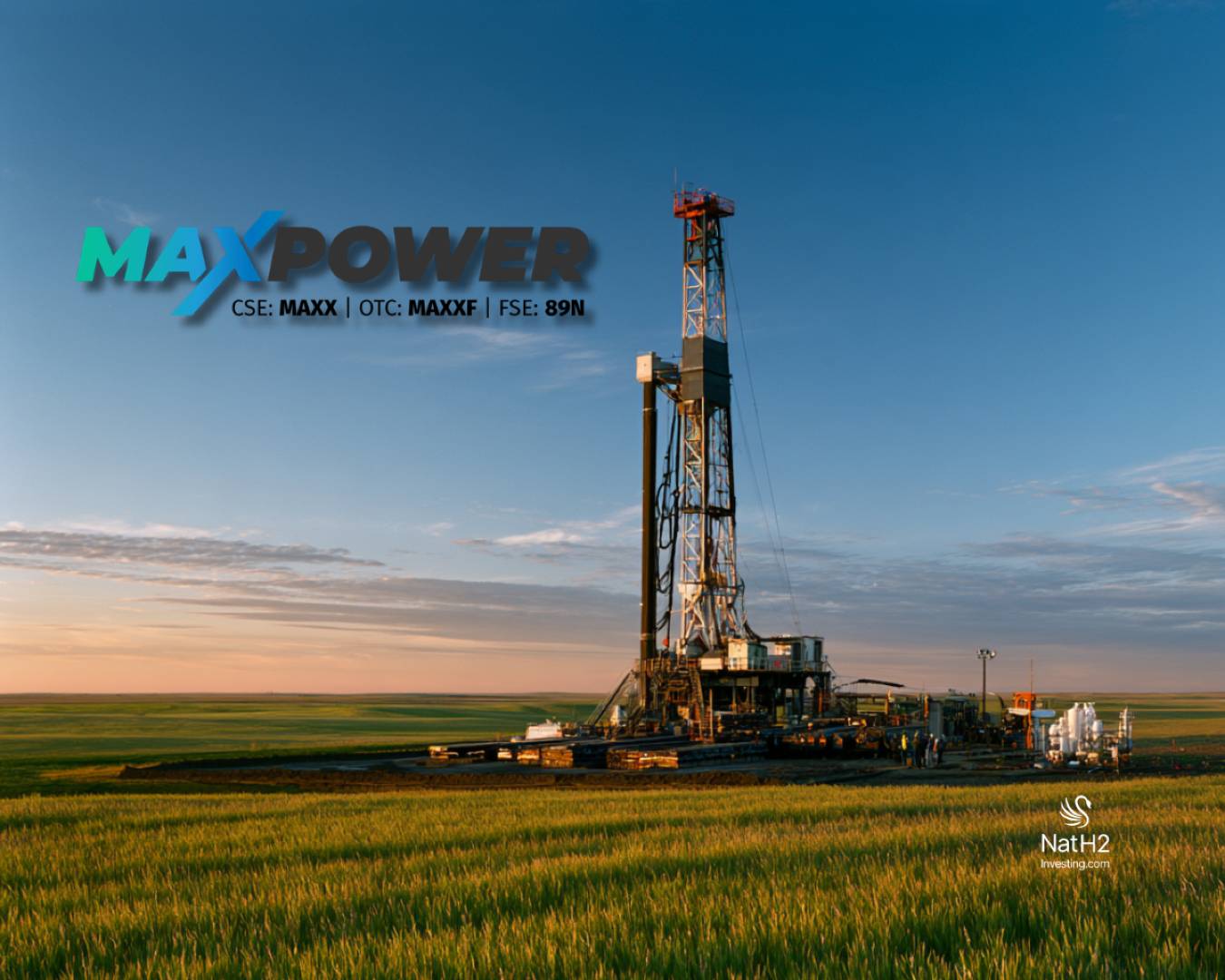
MAX Power Hits Highest Natural Hydrogen Readings Yet as Lawson System Expands in Saskatchewan
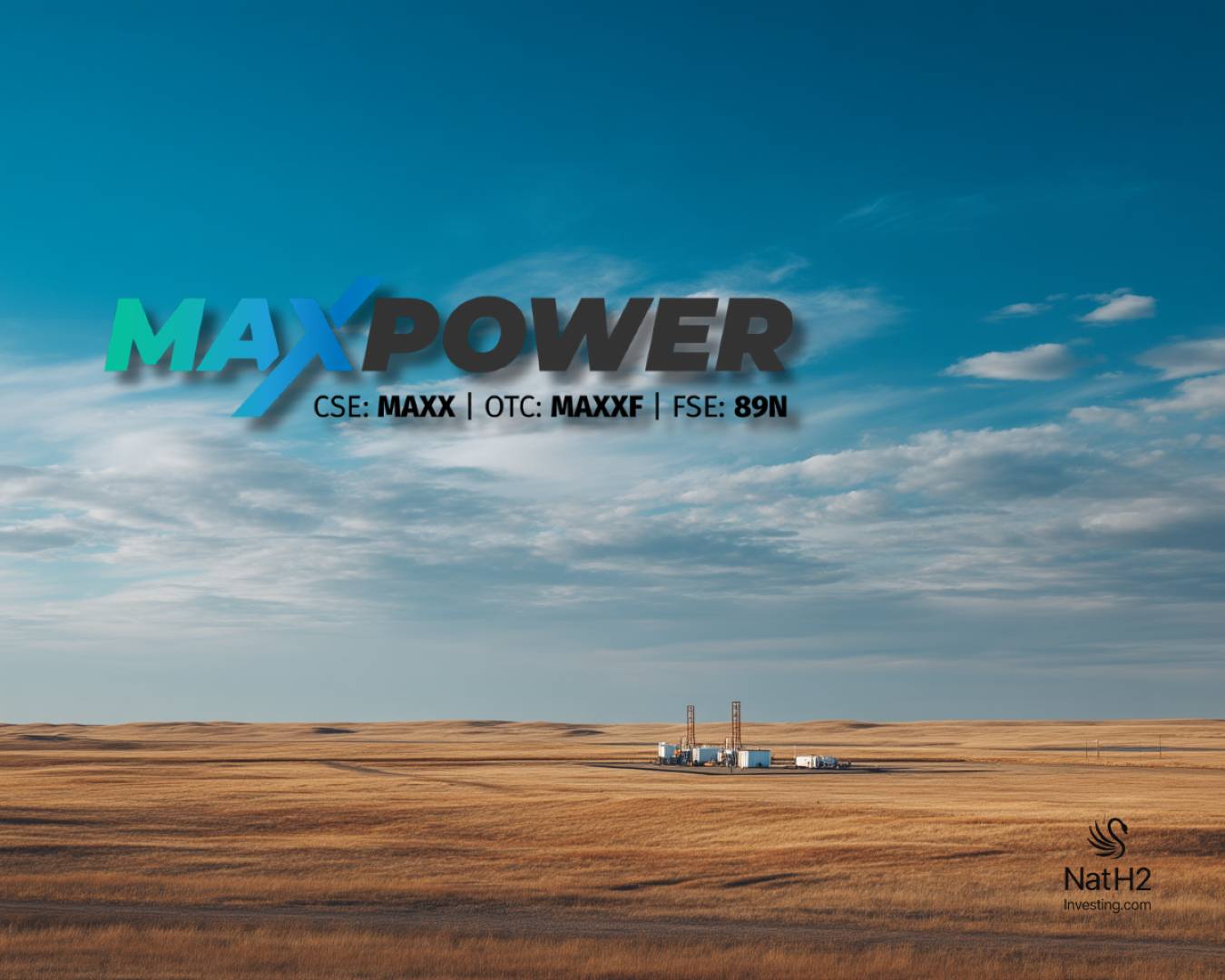
MAX Power Mining has reported its highest natural hydrogen readings to date from ongoing commercial validation drilling at the Lawson Complex in Saskatchewan, as the company continues to expand its interpretation of a potentially large subsurface hydrogen system.
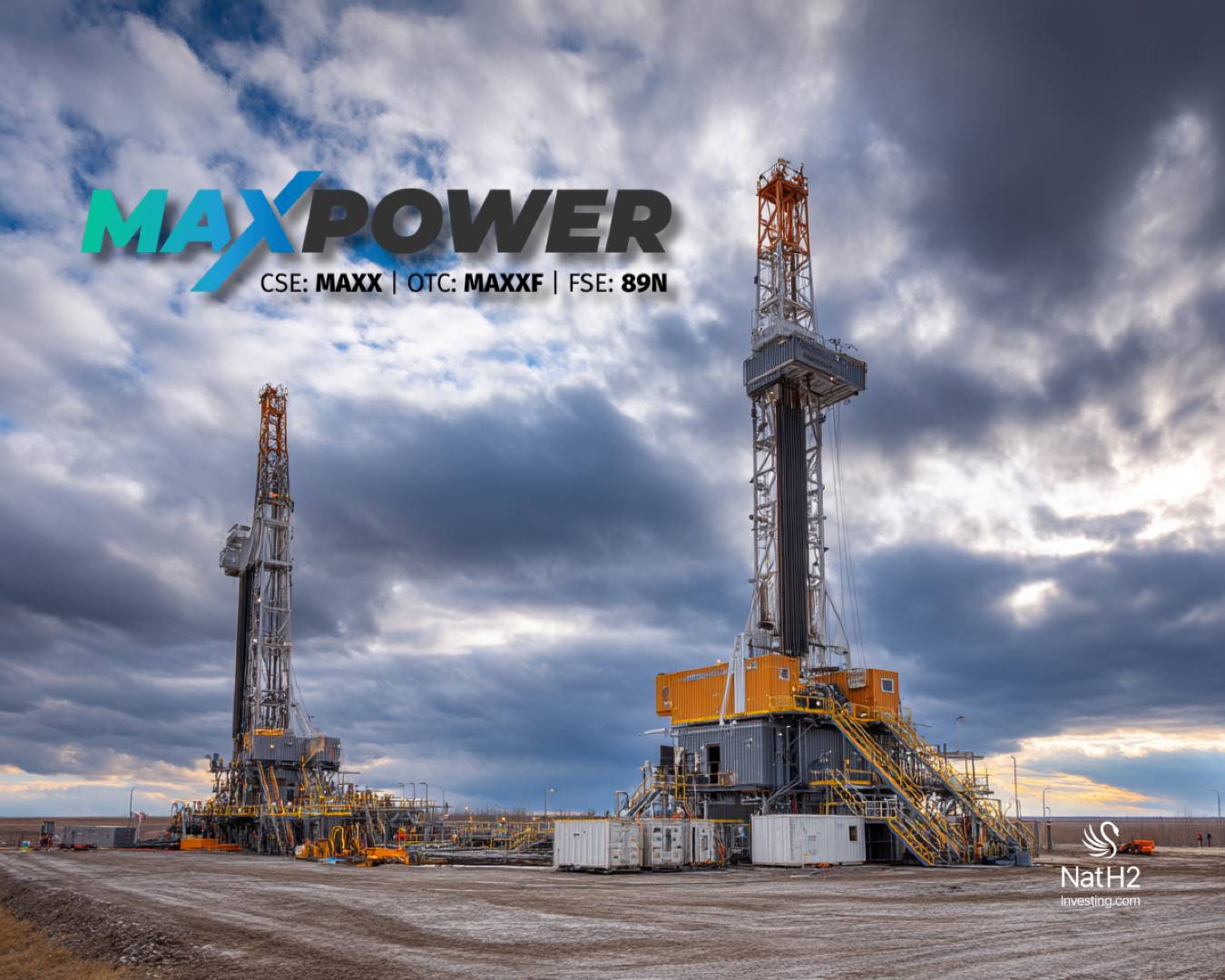
The latest update covers the completion of Lawson 3 and ongoing drilling at Lawson 4, located more than two kilometres to the west. MAX Power says the two wells have helped triangulate the Lawson system across a wider area, while Lawson 4 has intersected what the company interprets as a significant deep crustal fault or conduit within the uppermost Precambrian basement.
At Lawson 4, the interpreted fault or conduit was encountered at 2,310.5 metres, after natural hydrogen readings increased as drilling progressed from the lowermost basal Deadwood Formation at approximately 2,300 metres into the underlying basement complex.
MAX Power describes those readings as the highest encountered at Lawson to date, although the announcement does not provide specific hydrogen concentrations for the new measurements.
Drilling continued through intensely fractured rocks to a depth of 2,332.2 metres as of late September 7, with 41.35 metres of core recovered from the lowermost basal Deadwood and Precambrian basement interval and additional coring underway.
The onsite geological interpretation describes a highly fractured and faulted gabbro-mafic-ultramafic intrusive containing abundant metallic mineralization. Natural hydrogen readings remained highly elevated through the interval, according to the company.
That geological association is important to MAX Power’s working model for Lawson.
The company has been targeting an exotic terrane package containing mafic and ultramafic rocks that it considers prospective source rocks for natural hydrogen generation. The combination of those rocks with alteration, hydrothermal activity and extensive fracturing is increasingly shaping the company’s interpretation of how hydrogen may be generated and migrate through the system.
The newly encountered deep structure could potentially add another component to that model. MAX Power interprets the major fracture zone as a possible crustal-scale conduit, although establishing whether it actually connects hydrogen-generating zones with reservoirs elsewhere in the system will require further testing.
Lawson 4 has also produced another potentially significant geological observation considerably above the basement.
MAX Power recovered 29.7 metres of core from the basal Interlake Formation, where the company sees potential for a separate helium system within a carbonate sequence. A similar exploration concept emerged from Lawson 3.
The results are leading MAX Power to prepare its largest step-out well at Lawson so far.
Lawson 5 is planned approximately 27 to 31 kilometres northeast, toward the edge of the geological feature the company refers to as the “Salt Wall.” The well is intended to test whether the Lawson system extends significantly beyond the area currently constrained by drilling.
That is a substantial change in exploration scale. The current wells are helping define the architecture around the discovery area, while Lawson 5 is intended to test the broader footprint of the geological system.
MAX Power Chief Geoscientist Steve Halabura said the company’s next phase following Lawson 5 will focus on well completions, where the technical team plans to evaluate gas composition, deliverability and ultimately potential commerciality.
Those measurements will be particularly important because elevated hydrogen readings and favourable geology alone do not demonstrate that the wells are connected to a reservoir capable of sustained commercial production.
MAX Power makes a similar distinction in its investor discussion, stating that actual reservoir connectivity, flow and commerciality still need to be established through completions testing. The company nevertheless believes successive wells are increasingly supporting the possibility that different parts of Lawson form components of one interconnected natural hydrogen system.
Alongside the drilling results, MAX Power has also significantly increased its Saskatchewan exploration footprint.
The company added eight permitted parcels covering approximately 470,000 acres, across areas referred to as Genesis, Rider 2 and Fox Valley. The additions increase MAX Power’s permitted natural hydrogen land position in Saskatchewan by approximately 25% to 2.5 million acres, or roughly one million hectares.
MAX Power now describes Lawson as a 1,224-square-kilometre project area within its broader 475-kilometre Genesis Trend, with the interpreted Lawson Complex itself covering approximately 28 square kilometres.
The September update therefore advances two dimensions of the company’s Saskatchewan strategy at once: deeper geological understanding around the Lawson discovery and a larger regional land position from which to pursue additional targets.
The most important technical transition, however, is still ahead.
Lawson 3 and Lawson 4 are adding evidence for hydrogen generation, fracturing, hydrothermal activity and possible migration structures. Lawson 5 will test scale with a much larger step-out. After that, completions testing is expected to begin answering the questions that ultimately determine whether Lawson can move beyond geological discovery: what gas is present, how much can flow, whether the system is connected and whether it can support commercial production.
Full press release is attached below:
REGINA, Saskatchewan, Sept. 08, 2026 (GLOBE NEWSWIRE) -- MAX Power Mining Corp. (CSE: MAXX; OTC: MAXXF; FSE: 89N) (“MAX Power” or the “Company”) is pleased to report that ongoing commercial validation drilling at “Lawson Complex 1” in south-central Saskatchewan has successfully triangulated a very large Natural Hydrogen system with the completion of the Lawson #3 well. Meanwhile, ongoing drilling at Lawson 4 (located more than 2 km west of Lawson 3) has further expanded the system while also intersecting what’s interpreted to be a significant deep crustal fault or conduit in the uppermost Precambrian basement complex. Drilling continues within a very fractured network of exotic terrane rocks in the basement complex.
Highlights
- Lawson 4 intersected the deep crustal fault or conduit at 2,310.5 meters, following the highest Natural Hydrogen readings recorded to date at Lawson as drilling progressed from the lowermost basal Deadwood around 2,300 meters into the basement complex;
- Despite intense fracturing, drilling has continued successfully to 2,332.2 meters (as of late September 7), with a total of 41.35 meters of core recovered from the lowermost basal Deadwood and Precambrian basement complex, and another round of coring in progress;
- The onsite geologist has noted a highly fractured/faulted gabbro-mafic-ultramafic intrusive with abundant metallic mineralization, and Natural Hydrogen readings remain very elevated;
- An additional 29.7 meters of core was recovered from the basal Interlake Formation well above the basement complex where there is potential for a separate helium system in a carbonate sequence, similar to Lawson 3;
- Basement complex source rocks in Lawson 4 (and Lawson 3) comprise the hydrogen-prone exotic terrane package modelled by MAX Power’s geological team;
- Given developments at both Lawson 4 and Lawson 3, MAX Power’s technical and operations team is preparing the largest step-out drill hole to date (Lawson 5) to expand the Lawson Discovery to the edge of the “Salt Wall” approximately 27 to 31 km to the northeast.
Mr. Steve Halabura, MAX Power Chief Geoscientist, commented: “This is getting even better with each well as we cut through the Alkaline Complex, and the major fracture zone encountered in Lawson 4 is another milestone in our understanding of what is clearly a large Natural Hydrogen system. Following Lawson 5, where we intend to greatly expand the scale of this discovery, the next phase will comprise the completions program where we evaluate gas composition, deliverability and ultimately the potential commerciality of the Lawson system. This will be done in parallel with ramped up exploratory drilling as we eye an abundance of prospective targets within the Lawson Project area (1,224 sq. km), the broader Genesis Trend, and elsewhere.”
Mr. Ran Narayanasamy, MAX Power CEO, commented: “Ongoing commercial validation drilling continues to further de-risk Lawson as we expand a Natural Hydrogen subsurface system that has yet to be limited in any direction. This is once again Saskatchewan flexing its geological muscles as the province famous for its uranium and potash aims to become the global birthplace of large-scale commercialization of Natural Hydrogen, the world’s first new primary energy source in a generation. We eagerly anticipate additional exploration updates this month and further corporate developments related to MAXX LEMI progress and other initiatives.”
MAX Power Adds New Natural Hydrogen Permits
MAX Power has expanded its permitted landholdings for Natural Hydrogen in Saskatchewan with the addition of eight parcels of strategic ground covering 470,000 acres or 190,000 hectares (Genesis, Rider 2, and Fox Valley). This brings the Company’s total permitted land position to ~2.5 million acres or ~1 million hectares.
X (formerly Twitter): x.com/MaxPowerMining
LinkedIn: linkedin.com/company/max-power-mining-corp
Instagram: instagram.com/maxpowerminingcorp
YouTube: youtube.com/@maxpowerminingcorp
and by joining our Telegram channel: t.me/MaxpowerMining
Lawson is beginning to evolve from a Natural Hydrogen discovery into the potential outline of a much larger, interconnected subsurface system. With successive wells, MAX Power is seeing key geological elements increasingly come together: Prospective mafic-ultramafic source rocks, intense alteration, extensive fracturing, hydrothermal activity, highly elevated Natural Hydrogen readings, and now what is interpreted to be a major deep crustal fault or conduit. Combined with the triangulation provided by Lawson 3, and further expansion from Lawson 4, these observations are strengthening the geological model and raising the possibility that the individual wells are encountering different components of one potentially interconnected Natural Hydrogen system. Establishing actual reservoir connectivity, flow and commerciality will require near-term completions testing, but the emerging architecture is significant.
The next question is scale. Lawson 5 will represent the Company’s largest step-out to date at Lawson - approximately 27 to 31 km to the northeast, flanking the Salt Wall to test how far this discovery may extend. Meanwhile, global demand for reliable energy is accelerating as AI, data centers, advanced manufacturing and electrification place unprecedented demands on power infrastructure. If MAX Power can ultimately demonstrate that Lawson hosts a large, connected and commercially productive Natural Hydrogen system, the significance could extend far beyond Saskatchewan. Natural Hydrogen could potentially emerge as another scalable primary energy resource, generated naturally within the Earth rather than manufactured, with the potential to support clean, reliable energy generation close to where that energy is consumed. MAX Power is moving systematically through the questions required to test that possibility: Discovery has established a working Natural Hydrogen subsurface system; additional drilling is now defining the architecture and potential scale of this system; and completions testing will address the critical questions of connectivity, deliverability and commerciality.
Recent Videos
What if the Answer to Natural Hydrogen Was Beneath Our Feet All Along?
https://youtu.be/srV-RCmzzPk
President Chad Levesque On Significance of Lawson
https://youtu.be/wCeFQTKtOuI
What is Natural Hydrogen?
https://www.youtube.com/watch?v=S0bqqZeIpxc
Genesis Explained: Its “Salt Barrier” Advantage and Proximity to Demand
https://www.youtube.com/watch?v=3ytpHdve6S8
The Genesis Trend’s Industrial Corridor
https://youtube.com/shorts/IAgALH_s3mI
Lawson – Canada’s First Big Step into Natural Hydrogen
https://www.youtube.com/watch?v=lTTOwMxz_zo
MAX Power Leaps at Lawson
https://www.youtube.com/watch?v=Yr4Ha06__Eg
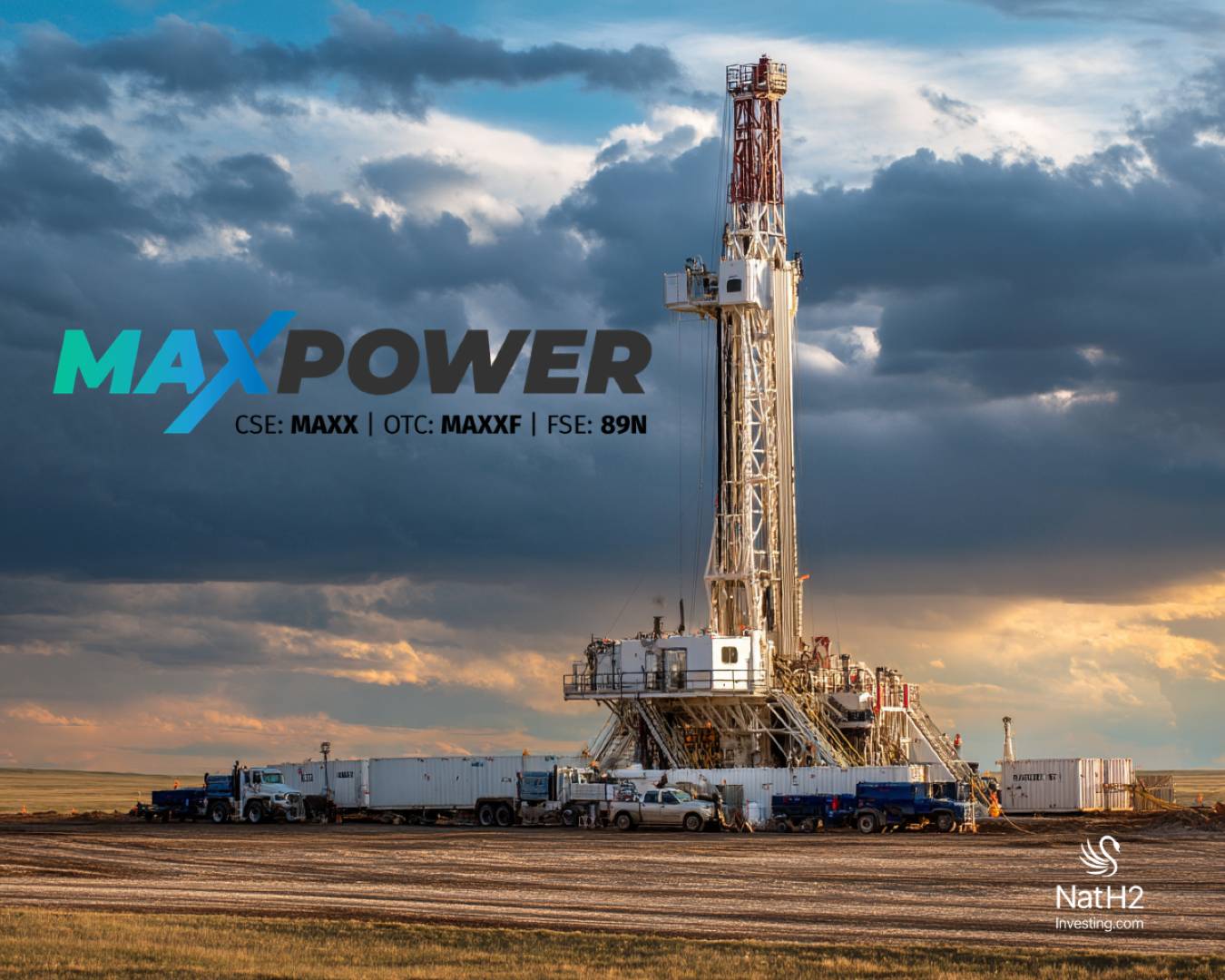
Watch the Drill in Action
https://www.youtube.com/watch?v=eguNGAfdIek
MAX Power Saskatchewan Natural Hydrogen Documentary Video
https://www.youtube.com/watch?v=TXGDtTUbJ2c
History in The Making at Lawson – Video Immediately Ahead of Drill Rig Setup
https://www.youtube.com/watch?v=BNHazk9Sy4E
About MAX Power
MAX Power is an innovative mineral and energy exploration company focused on the shift to decarbonization. The Company’s Lawson Discovery near Central Butte, Saskatchewan, represents Canada’s first-ever subsurface Natural Hydrogen system confirmed through deep drilling with data validated by three independent labs. MAX Power has built dominant district-scale land positions across Saskatchewan with approximately 2.5 million acres (~1 million hectares) of permits covering prime exploration ground prospective for large-volume accumulations of Natural Hydrogen, and has commenced a multi-well follow-up drill program to validate the commerciality of the broader Lawson Complex interpreted to cover a 28 sq. km area along the 475-km Genesis Trend. MAX Power also holds a significant equity position in Homeland Critical Minerals, which now owns the Willcox Project in Arizona, a lithium discovery confirmed in early 2024 by MAX Power. MAX Power is committed to responsible exploration and development practices that prioritize environmental stewardship, meaningful community engagement, and strong corporate governance.
On behalf of the Board of Directors,
Ran Narayanasamy, CEO
MAX Power Mining Corp.
info@maxpowermining.com
For further information, please contact:
Chad Levesque, President
Ph: 1-306-981-4753
chad@maxpowermining.com
Media Contact:
Sarah Mawji, Venture Strategies
sarah@venturestrategies.com
Cautionary Statement and Forward-Looking Information
This news release contains certain forward-looking statements and forward-looking information (collectively, "forward-looking information") within the meaning of applicable securities laws. Forward-looking information is often identified by words such as "anticipate", "believe", "continue", "could", "estimate", "expect", "intend", "may", "plan", "potential", "predict", "project", "should", "will" and similar expressions.
Forward-looking information is based on management's current expectations, estimates, projections and assumptions, including, among other things, that required regulatory approvals will be obtained, financing will be available on acceptable terms, planned exploration, appraisal and development activities will proceed as anticipated, equipment and personnel will be available as required, geological interpretations and technical results will support further advancement of the Company's projects, and market conditions will remain favourable.
Forward-looking information is subject to known and unknown risks, uncertainties and other factors that may cause actual results, performance or achievements to differ materially from those expressed or implied by such forward-looking information. Such risks and uncertainties include, without limitation, risks relating to exploration and development activities, geological and technical uncertainties, commercialization of Natural Hydrogen, reservoir performance, infrastructure availability, strategic partnership opportunities, market acceptance, commodity and energy prices, access to capital, regulatory approvals, environmental and permitting requirements, and general economic, market and business conditions.
There can be no assurance that the Company's plans, expectations or objectives will be achieved. Readers are cautioned not to place undue reliance on forward-looking information. Forward-looking information contained in this news release is made as of the date hereof and the Company undertakes no obligation to update or revise any forward-looking information, whether due to new information, future events or otherwise, except as required by applicable securities laws.
Additional information regarding the Company and the risks and uncertainties affecting its business and operations is available under the Company's profile on SEDAR+ at www.sedarplus.ca.
Neither the Canadian Securities Exchange nor its Regulation Services Provider accepts responsibility for the adequacy or accuracy of this release.