Gold Hydrogen Deepens Japanese Strategic Partnerships as Ramsay Moves Toward Commercialisation
Gold Hydrogen is seeing increased direct involvement from three of Japan’s largest industrial groups at its Ramsay natural hydrogen and helium project in South Australia, as the company works to move the project from exploration and appraisal toward potential commercial development.
Mitsubishi Gas Chemical, ENEOS Xplora and Toyota Motor Corporation have collectively invested A$14.5 million in Gold Hydrogen and are now increasing their direct engagement with the Ramsay Project on the Yorke Peninsula.
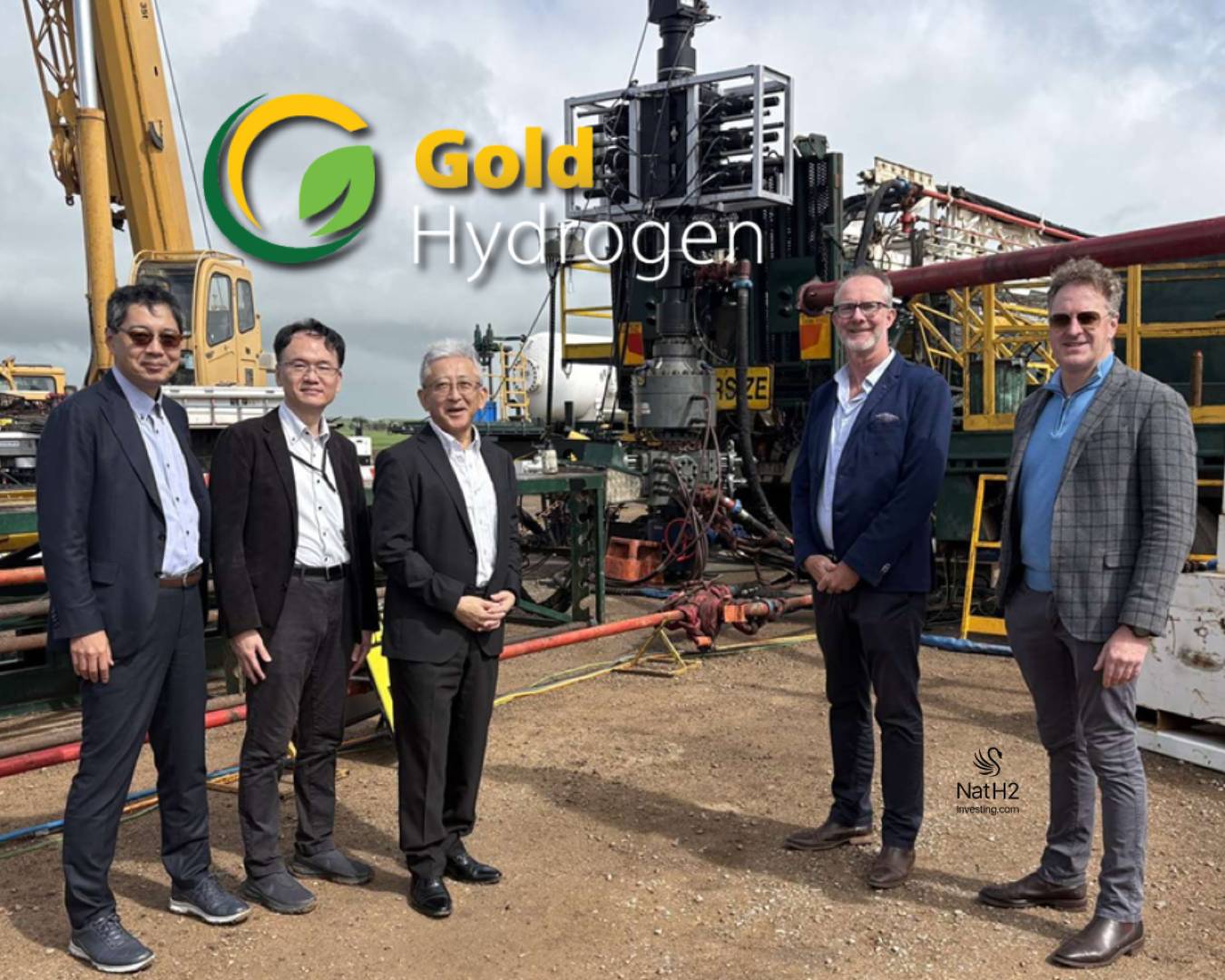
Mitsubishi Gas Chemical President and CEO Yoshinori Isahaya recently visited Ramsay with senior MGC management, while representatives from ENEOS Xplora also travelled to the project. Toyota is scheduled to conduct its own site visit later in September, alongside supporting site infrastructure for a proposed hydrogen fuel-cell trial.
The visits give the Japanese companies first-hand exposure to Gold Hydrogen’s natural hydrogen and helium operations, including the Ramsay wells, associated infrastructure and ongoing flow-testing activities.
Gold Hydrogen views the increased engagement as a transition from strategic investment toward strategic participation, bringing potential technical capabilities, downstream expertise and future commercial relationships closer to the project.
The Mitsubishi Gas Chemical relationship is already moving into a potential downstream application.
In June, Gold Hydrogen and MGC signed an MOU to assess the feasibility of developing a green methanol production facility on the Yorke Peninsula, with natural hydrogen from Ramsay contemplated as a potential core feedstock alongside local farm-crop waste.
For Gold Hydrogen, that study provides a possible route for connecting an upstream natural hydrogen resource with an established industrial hydrogen derivative.
MGC’s involvement is particularly relevant because of its international methanol and chemical-production expertise. During his Ramsay visit, Isahaya and other senior executives inspected the company’s wells, testing program and natural hydrogen and helium operations.
ENEOS Xplora’s engagement adds another technical dimension. Senior representatives recently visited Ramsay to inspect the wells, infrastructure and testing activities, with the delegation including expertise in geology, reservoir engineering and facilities engineering. The announcement also notes ENEOS Xplora’s experience operating a dissolved-gas-in-water project at Nakajo in Japan.
The involvement of Toyota introduces a potential mobility application. Its upcoming Ramsay visit is expected alongside infrastructure supporting a proposed hydrogen fuel-cell trial, extending the strategic relationships around the project beyond upstream exploration and into potential hydrogen utilization.
The three Japanese companies originally invested their combined A$14.5 million in Gold Hydrogen in July 2025. Gold Hydrogen says their value to the project extends beyond capital, potentially providing industrial capabilities, technical expertise, global relationships, downstream opportunities and future customers or partners.
The increased engagement coincides with an important period of technical appraisal at Ramsay.
Gold Hydrogen is advancing the Ramsay 3 testing program for both natural hydrogen and helium following testing at Ramsay 1 and Ramsay 2. The company says it has demonstrated helium flow to surface and has separated and purified helium to high levels, while work continues to establish potential commercial pathways for both gases.
The announcement includes an aerial image of the Ramsay 3 site on page seven showing the well location and supporting infrastructure being prepared for flow testing, illustrating the project's progression into a more intensive appraisal phase.
Managing Director Neil McDonald said Gold Hydrogen’s strategy is to prove up resources, demonstrate flow capability and establish economic parameters before working with strategic partners on potential commercial pathways.
That sequence remains important. Direct involvement from major industrial groups does not itself establish the economics of Ramsay, and Gold Hydrogen notes that the current testing program still carries geological and development risks. Ramsay 3 may not achieve its expected outcomes, and there is no certainty that Contingent Resources can be booked or that commercial development will proceed.
What the Japanese engagement does provide is a clearer view of how Gold Hydrogen could connect a successful subsurface development with potential downstream markets.
MGC brings a possible methanol pathway, Toyota provides exposure to hydrogen mobility and fuel cells, and ENEOS Xplora contributes experience from the international energy and subsurface sectors.
As Ramsay 3 testing progresses, the key technical questions remain flow performance, resource definition and economics. But alongside those subsurface milestones, Gold Hydrogen is increasingly building the industrial relationships that could become relevant if Ramsay advances from discovery toward development.
Full press release can be found here.