First Atlas Defines Two Natural Hydrogen Drill Targets at Oxford-Salt Springs in Nova Scotia
First Atlas Resources has delineated two high-priority natural hydrogen drill targets in Nova Scotia following a 2026 soil-gas densification campaign carried out by Québec Innovative Materials Corp. across the Oxford-Salt Springs area.
The development moves First Atlas beyond broad surface anomaly identification and into drill-target definition, with the company now integrating higher-density geochemical results with structural geology and ground geophysics to determine the final locations and orientations of two proposed exploration holes.
The 2026 campaign was specifically designed to increase sampling resolution around hydrogen anomalies identified during earlier exploration rather than simply expand the geographical footprint of the survey.
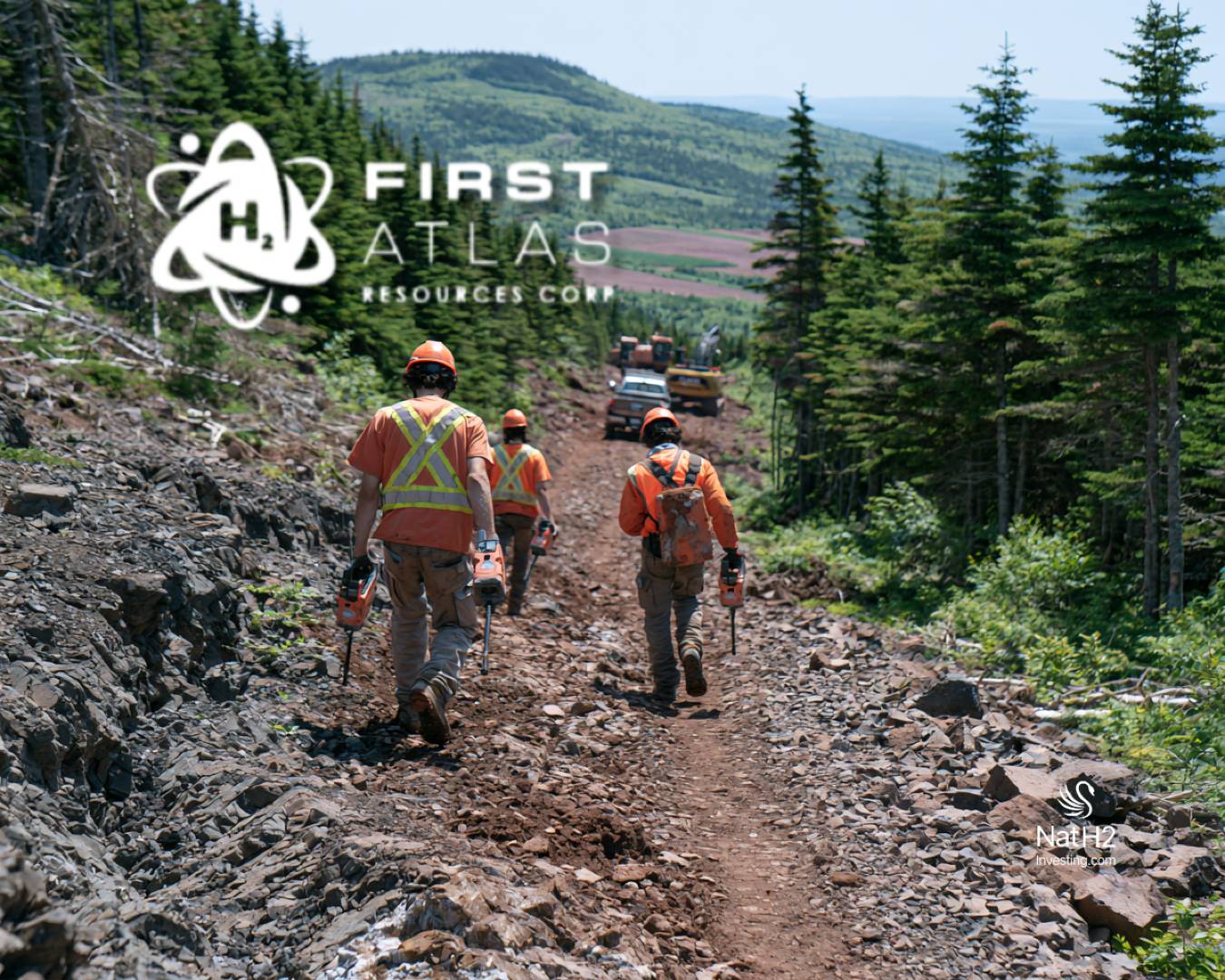
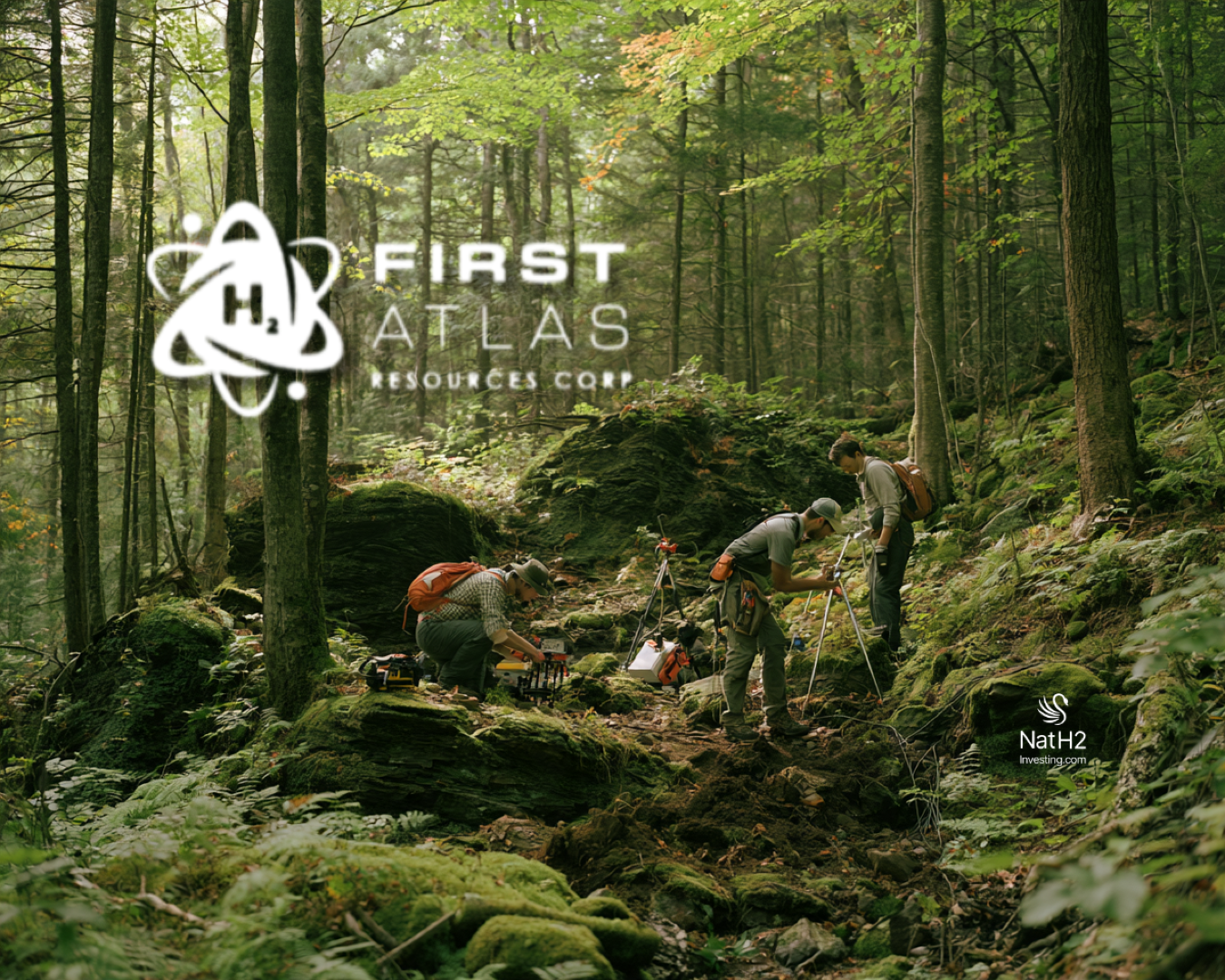
During July and August, QIMC systematically tightened soil-gas sampling along existing roads and trails across First Atlas' Salt Springs licences. Measurements included hydrogen alongside H₂S, carbon monoxide, methane and carbon dioxide, with helium subsequently added to the field program.
That higher-density dataset has allowed the technical team to examine the continuity and spatial relationships of individual hydrogen anomalies in considerably greater detail and narrow the broader exploration area into two specific targets for potential drilling.
First Atlas is not selecting the drill locations from hydrogen measurements alone.
The company and QIMC are combining the densified soil-gas dataset with helium and radon-thoron measurements, surficial geology, structural interpretation, ground magnetics and gravity data. The objective is to determine whether multiple independent datasets point toward the same subsurface structures before committing to final drill collars.
The geological setting is an important part of that targeting process.
Oxford-Salt Springs lies within a structurally complex portion of Nova Scotia's Cumberland Basin, where northwest-southeast, east-west and northeast-southwest faults intersect folded sedimentary rocks including the Windsor Formation and Cumberland Group.
First Atlas is evaluating those faults as potential fracture and permeability pathways that could influence the migration of naturally occurring hydrogen from deeper geological sources toward shallower formations.
The intersection of different structural orientations could be particularly relevant because faults and fracture networks can potentially provide pathways for subsurface fluids and gases. The company is therefore refining the two targets in relation to both the mapped structural architecture and the distribution of the surface hydrogen anomalies.
Surface geochemistry in Nova Scotia also comes with an additional complication: glacial overburden.
Variable thickness and composition of material deposited above bedrock can influence how much subsurface hydrogen reaches the surface and therefore affect the strength of individual soil-gas readings. A weaker surface measurement does not necessarily correspond to a weaker source at depth, just as an isolated stronger measurement does not by itself establish a subsurface accumulation.
That is one reason First Atlas is incorporating surficial geology into its interpretation rather than ranking targets solely according to peak hydrogen concentrations.
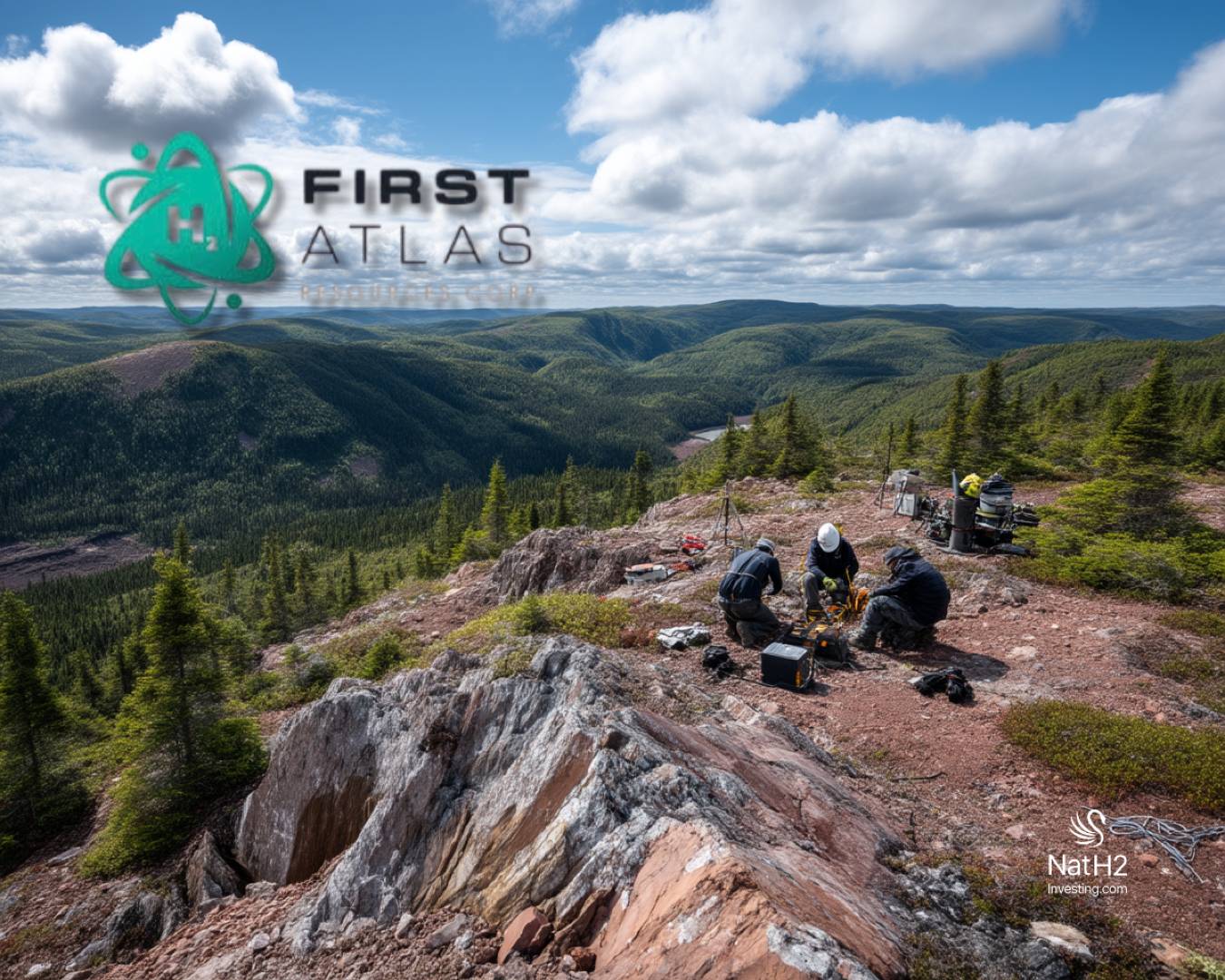
Ground magnetometer and gravity surveys provide another layer of information by helping the technical team interpret geological boundaries, structures and contrasts beneath areas where direct bedrock exposure may be limited.
The combined approach is intended to improve the probability that the proposed holes intersect the geological structures associated with the surface anomalies rather than simply drilling vertically beneath the strongest individual readings.
First Atlas President and CEO Richard Penn said the densification campaign achieved its intended objective of taking previously identified hydrogen anomalies and increasing the sampling resolution sufficiently to define specific locations for drill testing.
The company views that as an important transition for its Nova Scotia program: from surface exploration into drill targeting.
The next phase will focus on completing the technical integration required to turn the two targets into finalized drill designs.
That includes determining the collar location, azimuth, inclination and planned depth for each proposed hole. The current technical concept contemplates NQ core drilling, although final parameters remain subject to field conditions, permitting and operational planning.
The involvement of QIMC also connects First Atlas' program with a broader natural hydrogen exploration effort underway in Nova Scotia.
QIMC is carrying out exploration activities on First Atlas' Cumberland-Colchester properties under the companies' collaboration, while QIMC's own exploration elsewhere in the province has increasingly focused on combining surface geochemistry, structural interpretation, geophysics and drilling to investigate natural hydrogen systems.
Full press release is attached below:
Vancouver, British Columbia--(Newsfile Corp. - September 16, 2026) - First Atlas Resources Corp. (CSE: HHE) ("First Atlas" or the "Company") is pleased to announce that the extensive 2026 natural hydrogen soil-gas densification campaign undertaken by Quebec Innovative Materials Corp. ("QIMC") on behalf of First Atlas has resulted in the delineation of two high-priority drill targets in the Oxford-Salt Springs area of Nova Scotia.
The 2026 program was specifically designed to increase sampling resolution around previously identified hydrogen anomalies. QIMC systematically densified soil-gas sampling along existing trails and roads within the Salt Springs licensed properties, generating a substantially more detailed geochemical picture of the target area. The increased sampling density, together with ongoing geological and geophysical interpretation, has enabled the technical team to delineate two high-priority targets for drill testing.
2026 Densification Campaign Delineates Two High-Priority Drill Targets
During July and August 2026, QIMC intensified field sampling along existing roads and trails in the Salt Springs area. The objective was not simply to expand regional coverage, but to tighten sample spacing around anomalous hydrogen responses and improve the definition, continuity and spatial relationships of those anomalies. Soil-gas measurements included hydrogen (H₂) together with H₂S, CO, CH₄ and CO₂, with helium (He) subsequently incorporated into the field program.
The densification campaign has now provided First Atlas with the resolution required to delineate two high-priority drill targets in the Oxford-Salt Springs area. The targets are being refined through the integration of the soil-gas results with structural interpretation, surficial geology and ground-based geophysical work. This integrated approach is intended to optimize final drill collar locations and orientations rather than rely on individual surface measurements in isolation.
Exploration Highlights
QIMC undertook an extensive 2026 soil-gas densification campaign on behalf of First Atlas in the Oxford-Salt Springs area.
Sampling was systematically intensified along existing trails and roads to increase resolution around previously identified elevated hydrogen anomalies.
The higher-density 2026 dataset has resulted in the delineation of two high-priority natural hydrogen drill targets.
Helium and radon-thoron sampling is being used as complementary information in areas associated with anomalous hydrogen concentrations.
Ground magnetometer and gravity surveys are being integrated with the soil-gas dataset to improve definition of subsurface geology and structural controls.
The two targets are being advanced toward final drill-hole design, including collar location, azimuth, inclination and planned depth.
Geology
The Oxford-Salt Springs area lies within a structurally complex portion of the Cumberland Basin where mapped northwest-southeast, east-west and northeast-southwest faults intersect folded stratigraphy, including rocks of the Windsor Formation and Cumberland Group. Edward Procyshyn, P.Geo., who oversees exploration activities on First Atlas' Cumberland and Colchester natural hydrogen licences, is leading the geological interpretation of the Oxford-Salt Springs target area. These structures are being evaluated as potential fracture and permeability pathways that may influence the migration of naturally occurring hydrogen from depth. The two delineated drill targets are being refined in relation to these structural features and the spatial distribution of the densified hydrogen soil-gas anomalies.
Variable glacial overburden can affect the amount of hydrogen reaching surface and therefore the strength of individual soil-gas measurements. First Atlas and QIMC are consequently integrating the 2026 densified soil-gas results with surficial geology, structural mapping, GIS compilation, gravity and magnetic data to better define potential hydrogen migration pathways and subsurface trapping environments and to optimize the locations and orientations of the two proposed drill holes. Mr. Procyshyn has reviewed the technical information and geological interpretations presented in this news release.
CEO Comment
"The 2026 densification campaign has accomplished exactly what it was designed to do — take previously identified hydrogen anomalies and systematically increase the resolution around them to define specific locations for drill testing," said Richard Penn, President and CEO of First Atlas. "QIMC's team has undertaken an extensive field program along the roads and trails in the Oxford-Salt Springs area, and that higher-density dataset has now allowed us to delineate two high-priority drill targets."
"This represents an important transition for First Atlas from surface exploration to drill targeting in Nova Scotia. Our focus now is on integrating the detailed soil-gas results with the structural and geophysical datasets so that we can optimize the two drill holes and test the strongest targets supported by the combined technical evidence."
Next Steps
First Atlas and QIMC will complete the integration of the 2026 soil-gas dataset with helium and radon-thoron measurements, surficial and structural geology, and ground magnetic and gravity data. This work will be used to finalize the collar locations, azimuths, inclinations and planned depths of the two proposed Oxford-Salt Springs drill holes. The current technical concept contemplates NQ core drilling, with final drill parameters subject to field conditions, permitting and operational planning.
About First Atlas Resources Corp.
First Atlas Resources Corp. is a Canadian natural resource exploration company with 100%-owned projects in Quebec and Nova Scotia targeting natural hydrogen and critical metals. Its portfolio includes the LaCorne South Critical Minerals Project and Matane Project in Quebec, together with the Cumberland-Colchester natural hydrogen projects in Nova Scotia. Exploration activities on the Company's Nova Scotia natural hydrogen properties are carried out in collaboration with Quebec Innovative Materials Corp. (CSE: QIMC).
For further information, please contact:
First Atlas Resources Corp.
Richard Penn,
President & Chief Executive Officer
Tel: (778) 384-8923
Email: richard@firstatlasresources.com
Neither the Canadian Securities Exchange nor its Regulation Services Provider (as that term is defined in the policies of the Canadian Securities Exchange) accepts responsibility for the adequacy or accuracy of this release.
Forward-Looking Statements
This news release contains forward-looking statements within the meaning of applicable Canadian securities legislation, including statements regarding the two delineated drill targets, planned technical integration and follow-up work, final drill-hole locations and parameters, the timing and scope of an upcoming drilling campaign, exploration potential and the anticipated benefits of the Company's collaboration with QIMC. Forward-looking statements are subject to risks, uncertainties and assumptions, including geological uncertainty, the speculative nature of natural hydrogen exploration, the possibility that surface anomalies may not correspond to economic or recoverable accumulations at depth, changes to exploration plans, availability of financing, permitting and environmental requirements, operational and technical risks, and other factors that may cause actual results to differ materially from those anticipated. Readers are cautioned not to place undue reliance on forward-looking statements. The Company undertakes no obligation to update such statements except as required by applicable law.