Element One Reports Consistent Magnesium and Nickel Assays From Twin Sisters Ultramafic Feedstock
Element One Hydrogen & Critical Minerals has reported initial assay results from olivine-rich material at Millbank Materials’ Twin Sisters ultramafic project in Washington State, providing the first analytical characterization of feedstock central to the company’s strategy of pursuing critical-mineral recovery and stimulated natural hydrogen generation from the same rock.
Eight samples returned magnesium grades ranging from 26.39% to 28.46% Mg, while nickel concentrations ranged from 2,660 to 3,305 ppm Ni. Element One views the relatively narrow magnesium range as initial evidence of consistency across the material sampled, although the program remains limited in scale and does not establish that the same characteristics extend across the broader project.
The results are relevant because Element One is not approaching Twin Sisters as a conventional standalone mineral exploration project.
Instead, the company is evaluating the ultramafic material as a potential feedstock for two separate value streams: recovery of magnesium, nickel and potentially other mineral products through advanced processing, and generation of hydrogen through accelerated serpentinization.
Under Element One’s memorandum of understanding with Millbank Materials, the company has the right to purchase up to 50,000 tonnes per year of material represented by the sampling program, with an option to increase that amount to 100,000 tonnes annually.
That arrangement means the current work is less about proving the existence of ultramafic rock and more about determining whether an accessible domestic feedstock has the chemical and processing characteristics required for Element One’s proposed technology platform.
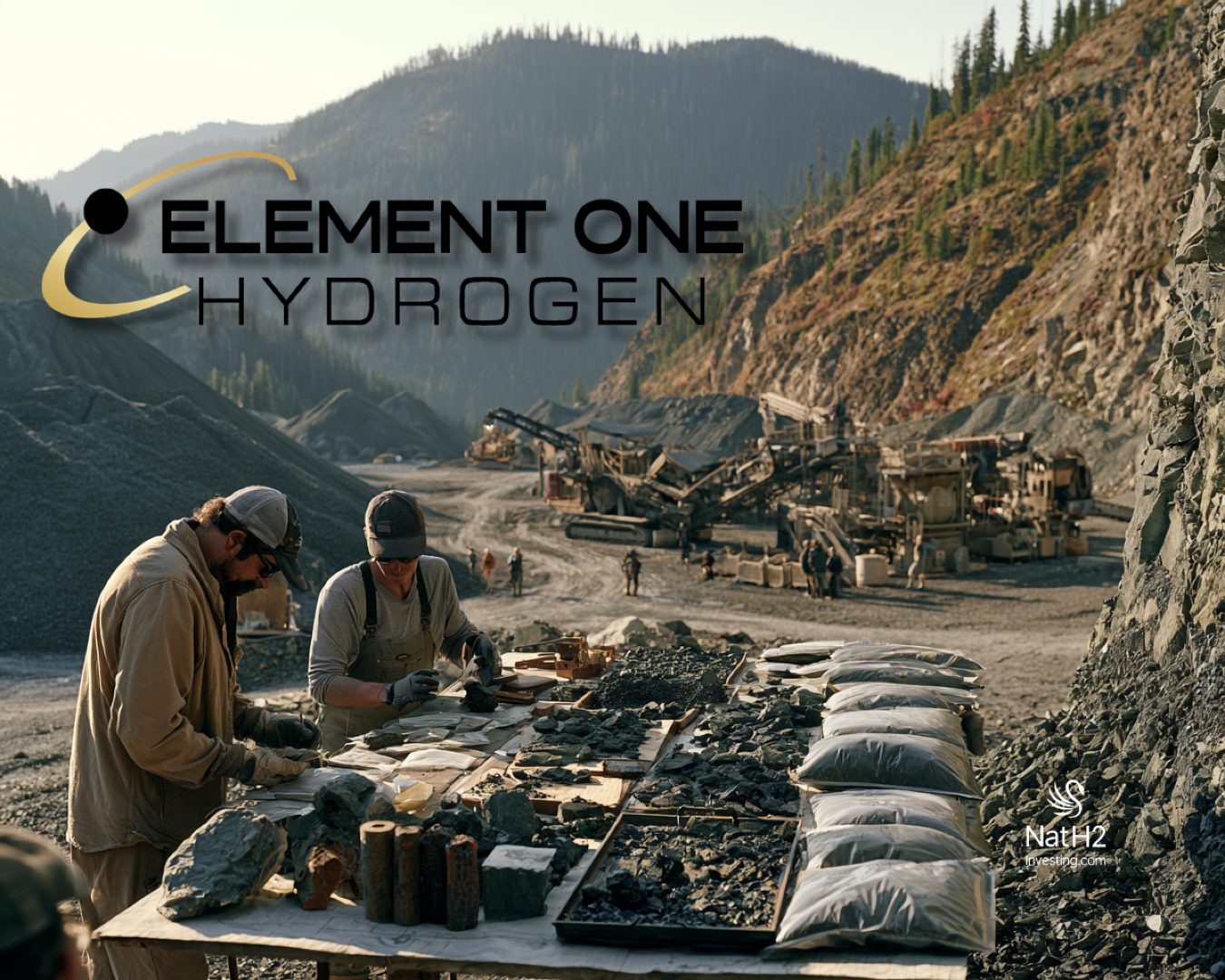
The eight samples included material collected from an existing quarry face as well as different processed fractions.
Magnesium grades remained relatively consistent across those samples. The highest result was 28.46% Mg, while the lowest was 26.39% Mg. Iron ranged from 5.01% to 6.10%, and nickel reached a maximum of 3,305 ppm in one of the quarry-face samples.
Element One considers that consistency potentially useful for future process design because a comparatively narrow feed-grade range could reduce some of the variability that mineral-processing systems must accommodate.
That proposition still needs to be tested more extensively.
The sampling program covered selected locations at the quarry face and several processed-material streams, including mine scalp, foundry sand and rejected fines. It does not establish a mineral resource or reserve, and the company has not yet demonstrated metallurgical recoveries or economic production from the material.
The next stage is already moving into independent process evaluation.
Representative sample splits have been delivered to New York-based Revora Materials, which will characterize the Twin Sisters material and evaluate its suitability for processing through the company’s proprietary IonMet™ technology platform.
That work is intended to move the project from feedstock chemistry toward a more important question: how much of the contained magnesium, nickel or other potentially valuable material can actually be recovered through the proposed processing route.
Element One expects the Revora evaluation to help define subsequent mineral-processing testwork and potentially inform the design and scope of future pilot-scale work.
No decision has been made to construct either a pilot or commercial facility.
The second component of the Twin Sisters strategy is natural hydrogen.
Ultramafic rocks can contain iron-bearing minerals capable of reacting with water through serpentinization. Under suitable conditions, oxidation of iron during that reaction can generate molecular hydrogen.
Element One intends to work with Columbia University to investigate whether hydrogen generation from the Twin Sisters material can be accelerated sufficiently to form part of a practical production process.
The concept therefore differs from exploration for naturally accumulated hydrogen reservoirs.
Instead of primarily searching for hydrogen that has already been generated, migrated and trapped underground, Element One is examining whether suitable rock can be used as a feedstock for stimulated hydrogen generation by accelerating a naturally occurring geochemical reaction.
The company has not yet demonstrated hydrogen generation, recovery or commercial production from the Twin Sisters material. Laboratory and technical evaluation with Columbia University remains ahead.
That distinction makes the chemistry reported in the latest assays relevant to both sides of Element One’s strategy.
The magnesium and nickel concentrations provide initial information for the critical-minerals pathway, while the mineralogical and iron-bearing characteristics of the ultramafic material will be important to determining its behaviour during hydrogen-generation experiments.
Element One’s longer-term concept is to determine whether processing the same feedstock can create complementary outputs rather than treating critical-mineral recovery and hydrogen production as unrelated projects.
In principle, that could create a system in which the economics of ultramafic-rock processing are supported by multiple products. Whether that integration is technically or economically achievable will depend on the results of the upcoming metallurgical and hydrogen-generation programs.
Full press release is attached below:
Vancouver, British Columbia--(Newsfile Corp. - September 22, 2026) - Element One Hydrogen & Critical Minerals Corp. (CSE: EONE) ("Element One" or the "Company") is pleased to announce assay results from sampling of olivine material at Millbank Materials' Twin Sisters ultramafic project in Washington State. The eight samples returned consistently strong magnesium values ranging from 26.39% to 28.46% Mg, together with nickel values ranging from 2,660 to 3,305 ppm Ni.
The results provide initial validation of the quality and consistency of the domestic ultramafic feedstock that underpins Element One's Twin Sisters strategy. Under its memorandum of understanding with Millbank Materials, the Company has the right to purchase up to 50,000 tonnes per year of material represented by the sampling program, with an option to increase that amount to 100,000 tonnes per year.
Representative sample splits have been provided to Revora Materials Inc. ("Revora"), a New York-based mineral-processing technology company, for independent evaluation as part of the parties' ongoing work to assess the suitability of Twin Sisters material for processing using Revora's proprietary IonMet™ technology platform.
Investor Highlights
Consistent magnesium-rich feedstock: all eight samples returned between 26.39% and 28.46% Mg.
Meaningful nickel values: assays ranged from 2,660 to 3,305 ppm Ni, supporting further metallurgical evaluation of potential recoverable mineral products.
Domestic supply pathway: the Millbank MOU provides access to up to 50,000 tonnes per year, with an option to increase to 100,000 tonnes per year.
Next-stage testwork underway: sample splits have been delivered to Revora for independent characterization and process evaluation.
Potential dual-value platform: Element One is evaluating the same ultramafic rock for critical-mineral recovery and natural hydrogen generation through accelerated serpentinization.
Strategic Significance and Next Steps
Twin Sisters is central to Element One's strategy of combining domestic feedstock, innovative mineral-processing technology and natural hydrogen development within a single North American platform. The assay program represents an important step in characterizing the feedstock before more detailed process and recovery testwork.
The consistency of the magnesium assays is particularly relevant to potential future production. A comparatively narrow feed-grade range can support more predictable process-design and testwork assumptions than highly variable material, although additional sampling and metallurgical testing are required to determine whether this consistency extends across future feedstock and can be maintained in operation.
The Company's planned next steps include supporting Revora's independent characterization and IonMet™ process evaluation, defining follow-up mineral-processing testwork and working with Columbia University to advance evaluation of the material's natural hydrogen potential. Results from these programs are expected to help inform the scope and design of future pilot-scale work. No decision to construct a pilot or commercial facility has been made.
"These results are important because they provide initial validation of the consistency of the domestic feedstock at the centre of our Twin Sisters strategy," commented Brad Kitchen, President and CEO of Element One. "Our objective is to evaluate two potential value streams from the same ultramafic rock: critical minerals through our work with Revora and natural hydrogen through our collaboration with Columbia University. With feedstock access established under the Millbank MOU and material now in Revora's hands for evaluation, we are advancing the disciplined testwork needed to assess that opportunity."
Twin Sisters Assay Results
Sample | Easting | Northing | Mg (%) | Fe (%) | Ni (ppm) | Material / location |
1142325 | 573161 | 5399447 | 27.64 | 6.10 | 2,660 | Existing face |
1142326 | 573178 | 5399418 | 28.46 | 5.55 | 3,059 | Existing face |
1142327 | 573154 | 5399383 | 27.46 | 5.60 | 2,712 | Existing face |
1142328 | 573101 | 5399381 | 28.25 | 5.71 | 2,729 | Existing face |
1142329 | 573082 | 5399351 | 27.12 | 5.01 | 3,305 | Existing face |
1142330 | 573275 | 5399516 | 26.39 | 5.65 | 2,673 | 3/8-inch-minus mine scalp |
1142331 | 573071 | 5399544 | 27.10 | 5.71 | 2,677 | Foundry sand |
1142332 | 573025 | 5399516 | 27.77 | 5.70 | 2,933 | 1/4-inch-minus mine scalp |
Sampling and Analytical Procedures
Rock samples were collected at regular intervals across the face of an open cut at Millbank Materials' quarry, where olivine material is quarried for foundry-sand production. Samples of crushed and screened material were also collected to evaluate several size fractions, including rejected fines from prior crushing activities and finished foundry-sand product.
Samples were collected by Company personnel, placed in sample bags, assigned unique identification numbers and delivered to Bureau Veritas Laboratories in Vancouver, British Columbia, for multi-element analysis. A four-acid digestion with ICP-ES analytical procedure was used. The program included quality-assurance and quality-control measures consisting of standards, blanks and duplicates.
The results reported above are from a limited sampling program at selected quarry-face and processed-material locations and may not be representative of all material at the Twin Sisters project. The Company has not established a mineral resource or reserve at Twin Sisters, and mineral recoveries and economic viability have not yet been demonstrated.
Natural Hydrogen Potential
In addition to its critical-mineral potential, the Twin Sisters ultramafic material is being evaluated for its potential to generate natural hydrogen through accelerated serpentinization-the reaction of water with iron-bearing ultramafic rock. Element One intends to work with Columbia University to advance laboratory and technical evaluation of this potential alongside its mineral-processing program. The generation, recovery and commercial production of hydrogen from the Twin Sisters material have not yet been demonstrated.
Qualified Person
The scientific and technical information in this news release has been reviewed and approved by Jeremy Hanson, P.Geo., an independent geologist to the Company and a "qualified person" as defined by National Instrument 43-101 - Standards of Disclosure for Mineral Projects.
About Element One Hydrogen & Critical Minerals Corp.
Element One Hydrogen & Critical Minerals Corp. (CSE: EONE) is building an integrated North American natural hydrogen and critical minerals platform focused on advancing secure, domestic energy and critical minerals supply chains. Through a growing portfolio of strategic resource assets, proprietary technologies and industry partnerships, the Company is advancing the exploration, development and commercialization of natural hydrogen, magnesium and other critical minerals. Element One's projects span British Columbia, Washington State and Alaska and are supported by collaborations with world-class research institutions, including Columbia University, and strategic partnerships with industry, Indigenous communities and government.
Get Social:
X - www.x.com/Element_One_H2
LinkedIn - www.linkedin.com/company/element-one-h2
Instagram - https://www.instagram.com/element.one.hydrogen/?hl=en
For further information visit our website at www.e1-h2.com.
On behalf of the Board of Directors
Brad Kitchen
President and Chief Executive Officer
Element One Hydrogen & Critical Minerals Corp.
Email: bkitchen@e1-h2.com
Telephone: 604.506.7555
Forward-Looking Information
This news release contains "forward-looking information" within the meaning of applicable Canadian securities laws. Forward-looking information includes, but is not limited to, statements regarding: the evaluation and potential suitability of Twin Sisters material for processing using Revora's IonMet™ technology; the potential recovery of magnesium, nickel or other mineral products; the Company's access to and potential purchase of feedstock under the Millbank MOU; planned characterization, metallurgical, process-development and pilot-scale work; the timing, scope and results of future testwork; the potential generation, recovery or commercialization of natural hydrogen through accelerated serpentinization; collaboration with Revora and Columbia University; and the development of an integrated natural hydrogen and critical-minerals platform.
Forward-looking information is subject to known and unknown risks, uncertainties and other factors that may cause actual results or events to differ materially from those expressed or implied, including risks related to early-stage technology development, sampling representativeness, metallurgical recoveries, commodity prices, financing, permitting, regulatory approvals, partner performance and general economic and market conditions. Readers are cautioned not to place undue reliance on forward-looking information. Except as required by applicable securities laws, the Company undertakes no obligation to update or revise forward-looking information to reflect events or circumstances after the date of this news release.
Neither the Canadian Securities Exchange nor its Regulation Services Provider accepts responsibility for the adequacy or accuracy of this release.