Abergeldie Secures US Patent for Underground Hydrogen Storage System Using Deep Vertical Shafts
Australian infrastructure engineering company Abergeldie Complex Infrastructure has secured a United States patent for an underground compressed hydrogen storage system developed by its Ardent Underground division, marking a step forward in the company's efforts to commercialize an alternative to conventional above-ground hydrogen storage.
The patent, titled Compressed Gas Storage Tank, System and Method, was issued on September 22, 2026, under US Patent No. 12,742,516. It protects intellectual property associated with Ardent Underground's approach to storing compressed hydrogen in purpose-built vertical shafts constructed deep below the surface.
The technology is designed to address one of the infrastructure challenges facing the hydrogen industry: storing large quantities of gas efficiently while maintaining pressure containment, hydrogen purity and a relatively small surface footprint.
Unlike natural hydrogen exploration projects, which seek to identify hydrogen generated by geological processes, Ardent Underground's system is intended to store hydrogen that has already been produced. Its principal application is therefore in hydrogen storage infrastructure rather than geological hydrogen extraction.
The distinction is relevant as hydrogen projects increasingly consider how production, storage and end-user demand can be connected. Even where hydrogen can be produced at competitive cost, storage capacity may be needed to accommodate variations in production rates, industrial consumption and energy demand.
Hydrogen's low volumetric energy density makes this particularly challenging. Large quantities of gas require substantial storage volumes or high-pressure containment systems, creating engineering and cost considerations for projects seeking to operate at industrial scale.
Ardent Underground proposes to address those constraints by using the surrounding geology as part of the structural support for a purpose-built storage chamber.
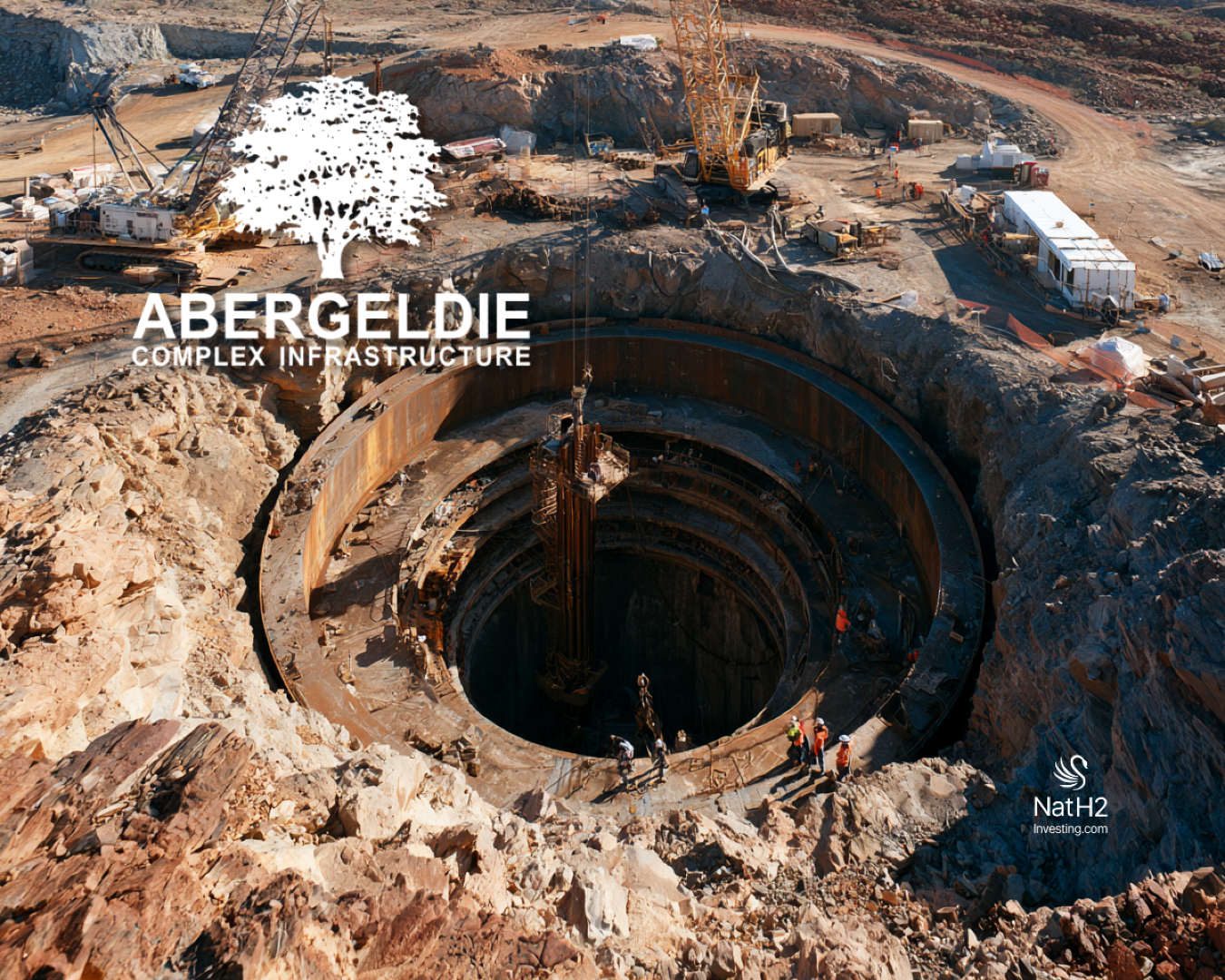
The system consists of a large-diameter vertical shaft drilled from the surface into suitable rock formations. A steel liner is installed within the shaft and grouted into place, creating an engineered underground vessel that can be connected to surface compression, injection and withdrawal equipment.
The surrounding rock provides structural support against the pressure generated by the stored gas, potentially reducing the amount of pressure-containment material required compared with an equivalent unsupported vessel.
The approach combines conventional underground construction methods with a specialized compressed-gas storage design.
According to Abergeldie, each shaft can accommodate up to 150 tonnes of hydrogen, with multiple shafts installed at a single location to increase total storage capacity.
That modular configuration is intended to allow storage developments to expand according to project requirements rather than relying on a single large underground cavity.
The company's proposed system also offers a comparatively limited above-ground footprint because most of the storage volume is located below the surface.
This could be relevant for hydrogen projects where land availability, proximity to industrial users or surface infrastructure constraints influence site selection.
A central feature of the technology is Abergeldie's experience in blind boring, a shaft construction method in which excavation proceeds vertically from the surface without requiring workers to access the shaft during drilling.
The technique is already used in specialized underground infrastructure construction. Ardent Underground applies that engineering capability to the creation of large-diameter hydrogen storage chambers.
Full press release can be found here.